
The Way I See It: February 2026
/
PUBLISHER’S LETTER
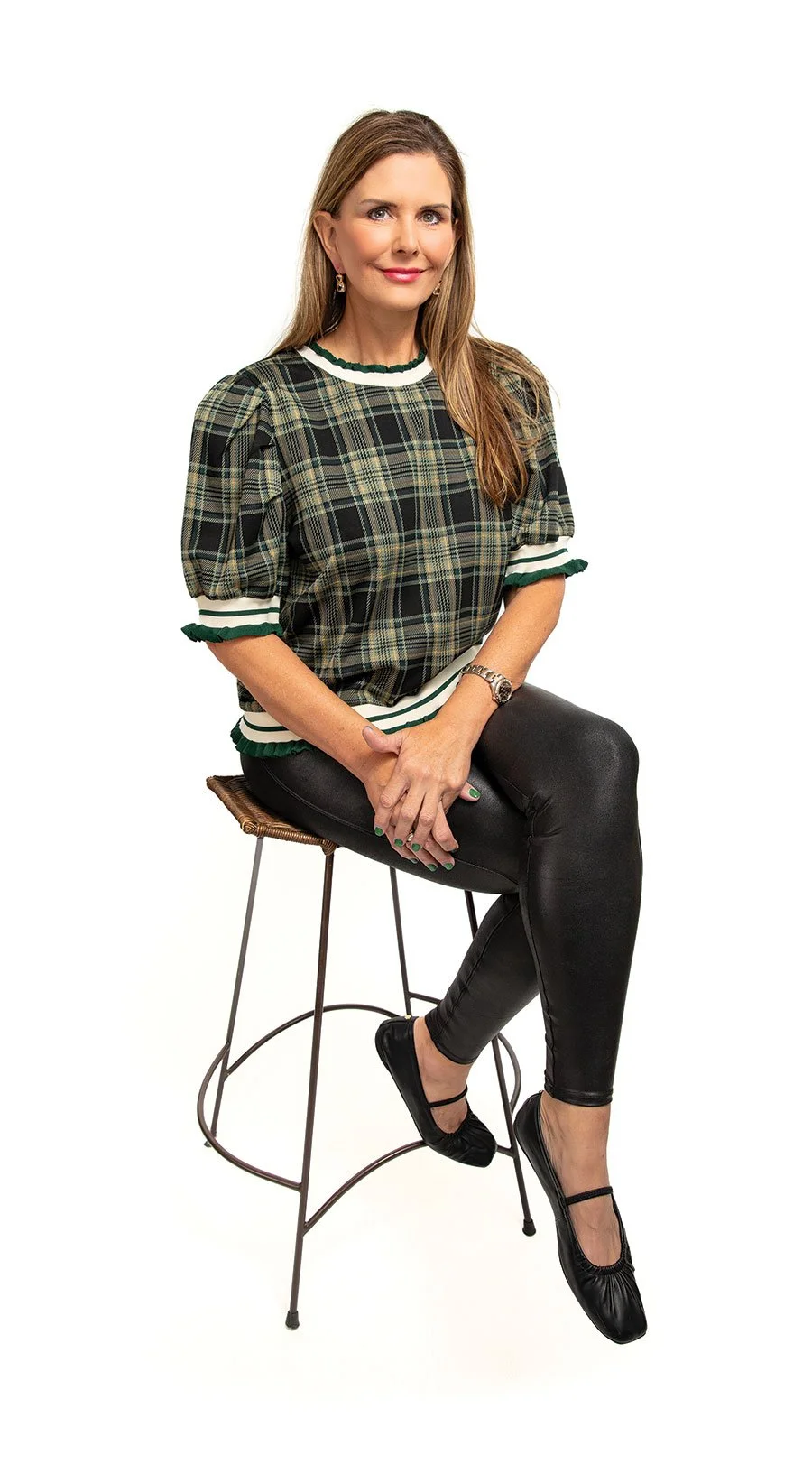
Robin Rogers, Ed.D.
February 2026
Like most people in middle age, I think about my own mortality from time to time. Wills, trusts, and life insurance are reviewed regularly at my house. I don’t sit around brooding about death, but I probably give it more thought than the average person. I have a child with special needs who will require physical care for her entire life, and the idea of leaving her in someone else’s care is far scarier to me than death itself. So yes—I want to live a long, long time.
That desire has shaped many of my decisions, especially the questionable ones.
About 20 years ago, after having three children, gaining some weight, and getting a cholesterol reading of 350, I decided I was going to take control. I hired a personal trainer. For nine months, I worked out faithfully, logged my meals, and eventually managed to run a couple of miles without passing out. I also lost . . . four pounds.
Just. Four.
Since I don’t enjoy sweating under the best of circumstances, I turned in my locker key, retired my sweatbands, and stopped writing checks to the exercise sergeant who punished me weekly. (Honestly, I think the only reason I stuck it out that long was because I liked the trainer.)
For years, being skinny was all I wanted. Because of that, I tried every diet known to womankind. If Oprah drank it, I drank it. If Dr. Atkins said pork skins were the answer, I happily complied. I endured cabbage soup, diet shakes, and anything advertised on late-night television that promised weight loss while I slept. That was always my favorite concept.
Lose 10. Gain 20. Repeat.
By my early 30s, being thin had become an obsession. I was unhappy, depressed, and willing to do just about anything to change my body. I wasn’t healthy. I was desperate.
Then, in 2001, the FDA approved the Lap-Band, a surgical procedure that restricted how much food a person could eat. If the FDA approved it, it had to be safe . . . right? I scraped together savings, couch change, and garage-sale cash, and in 2004, I did it.
Over the next two years, I lost about 80 pounds. I was thrilled. Proud. Relieved. I told anyone who would listen how this “minimally invasive” miracle had changed my life.
A few years later, the band slipped. I couldn’t eat anything; I was constantly sick and vomiting. I found a specialist out-of-town and learned that new data suggested the Lap-Band wasn’t quite the miracle doctors first thought it was. But logic had left the building. I didn’t want health; I wanted to stay thin.
“Just take this band out and put another one in,” I told the doctor.
And so, with my money, he did it.
Fast-forward another 10 years. The second Lap-Band failed too—this time so badly that I couldn’t swallow. I landed in CHRISTUS St. Michael, where my gastroenterologist stretched my esophagus gradually, over a long six weeks, and made me promise to remove the band permanently. Years of vomiting had damaged my esophagus, and I was diagnosed with Barrett’s esophagus, a pre-cancerous condition.
Cancer. That word will sober you up fast.
I learned that repeated acid exposure from vomiting can permanently damage the esophagus. If you have chronic reflux, please hear me: get it checked. Many people live with Barrett’s safely, but ignoring it is not a great plan.
Last September, after what I assumed would be a routine scope, my doctor called to say that two pathologists had read my biopsies, and my Barrett’s esophagus cells were turning cancerous. Suddenly, I was being referred to a doctor in Shreveport because no one locally could take it any further. The precancer cells needed to be burned away via multiple rounds of ablation.
My first appointment was in November. My new doctor, who is a rockstar, trained at M.D. Anderson for exactly this. I went in for the first ablation feeling confident. I’d been working in the yard, had a tan, and even spotted some calf definition in the elevator mirror. I was wearing Nike shorts, a Four States Living T-shirt, and my cutest tennies. I “looked healthy.”
With a surgery room full of residents and nurses, the doctor told me that the pathology report revealed a nodule on my esophagus, in addition to the changing cells. Therefore, he thought we should actually delay the ablation—he could remove the nodule that day and then kill the precancer cells at a future appointment.
I hadn’t been aware of any nodules before that day, and I was already stressed about how much time this was going to take from my family. So, with an IV already started in my arm, and in my most authoritative teacher voice, I insisted he do everything he could in one visit. I explained how strong I was, how I lift my daughter every day, how I can’t afford multiple trips away from her. I looked him square in the eyes and told him how strong I was, with the confidence of a 25-year-old MMA fighter.
Oh boy, was I wrong.
I should have told him, “I am 55. I don’t workout. I eat like a 5-year-old. I don’t wear sunscreen. I love to rake, but I also consider riding my lawnmower as exercise. Oh, and my pain tolerance is zero. Take your sweet time.” But I didn’t.
What followed was a three-part treatment that the doctor performed in one go; I’m convinced it was because I had been so compelling with my bossy teacher voice. When I woke up, I was miserable. I dry-heaved the entire drive home, lying on the floorboard of my wheelchair-accessible van, crying, burning from the inside out. When I got home, I collapsed.
For three weeks, I barely left my bed. I could not eat anything and rapidly lost 20 pounds. My muscles atrophied. Walking from one room to the next exhausted me. The doctor prescribed 530-calorie protein drinks to keep me from losing more weight. I tried to choke them down. I was miserable.
At my lowest point, I wondered if that was it.
I wish I’d had a crystal ball back in 2004—or, better yet, a healthier mindset. Oh, how I would have made different choices.
This issue of Four States Living is about health and beauty and wellness—and how many forms they can take. It’s not bingeing and purging. It’s not surgery or miracle medications. It doesn’t have to be GLP-1s or plastic fixes. Feeling good about yourself starts in your head, not on a scale. If plastic surgery or weight-loss surgery or GLP-1s will make you happy, I’m the last to criticize your path. I just wish I had cured my mental issues about my size before I attacked my physical body with a surgery. Maybe someone will read my words and take a pause before finding a medical “cure” for a problem that isn’t actually a problem at all.
Inside these pages, you’ll find stories about mental wellness, movement that fits into real lives, and fitness that doesn’t punish. Life is precious. Take a proactive step—any step—toward living a longer, happier one. Find what works for you. I’ve got a busy year ahead of me, but I’m going to stay the course. Lots of exciting life to live.
As always, thanks for reading FSLM.