
A Sky Full of Dreams
/John Veon turned his lifelong hunting hobby into a career in ecology research
By Greer Veon
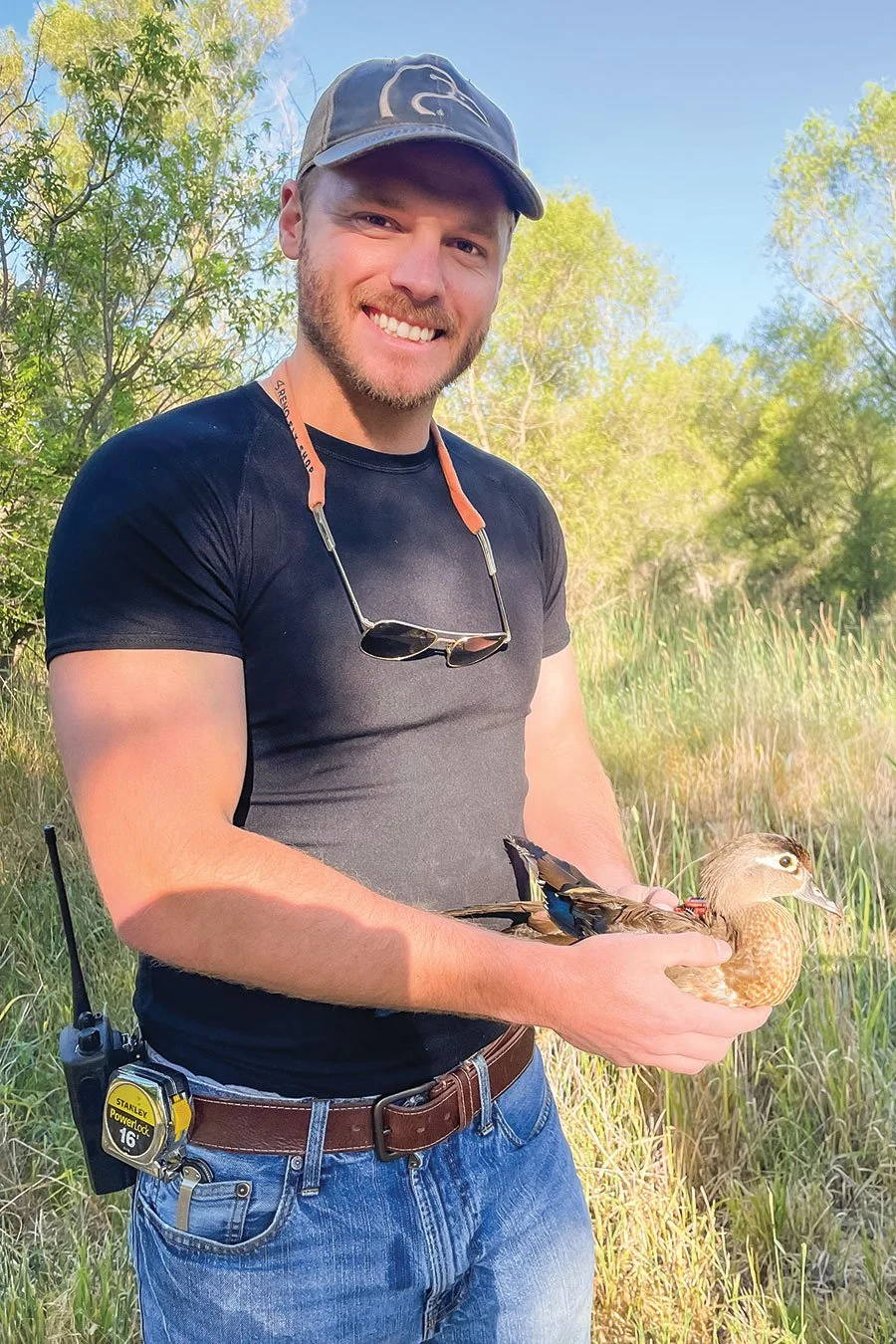
Assisting USGS, John tagged a wood duck with a “GPS backpack.” The data was used to better understand the movement ecology of nesting hen wood ducks. submitted photo.
For my little brother, John Veon, the duck blind is where great ideas are born, where someone can witness overhead a sky full of dreams. He spent his childhood trapping insects in our backyard and rolling his red wagon to the neighborhood pond to fish. Since he was young, John has had a natural tendency to obsess over different organisms and their environment.
John is now a PhD candidate at the University of California–Davis doing, more or less, what he has done his entire life: studying ecology. His research focuses on waterfowl and wetlands, which is fitting, because anyone who knows John would tell you that the first thing they associate with him are ducks. Growing up in Texarkana, he was one of the many kids around town who spent their holiday breaks in the duck woods of Mercer Bayou, around Millwood Lake, or in a blind at Anderson Wright’s family farm. Now, his apartment in California is decorated with vintage wooden decoys, including a 1950s Victor Majestic Mallard, which was found in the Cache River bottoms. One might assume that John has pursued this career all his life—and in some ways, he has. But, like the ups and downs of a duck population, John’s career path has not been so linear.
John’s story starts like that of many kids who grow up around outdoors enthusiasts. Our father, Robert Veon, taught him to fish and hunt before taking him out for his first duck hunt at the age of 10. “All of a sudden, [the sky] went from black to light blue, and everything went from dead silence to full of life, with big ducks zipping around,” John said. He was hooked.
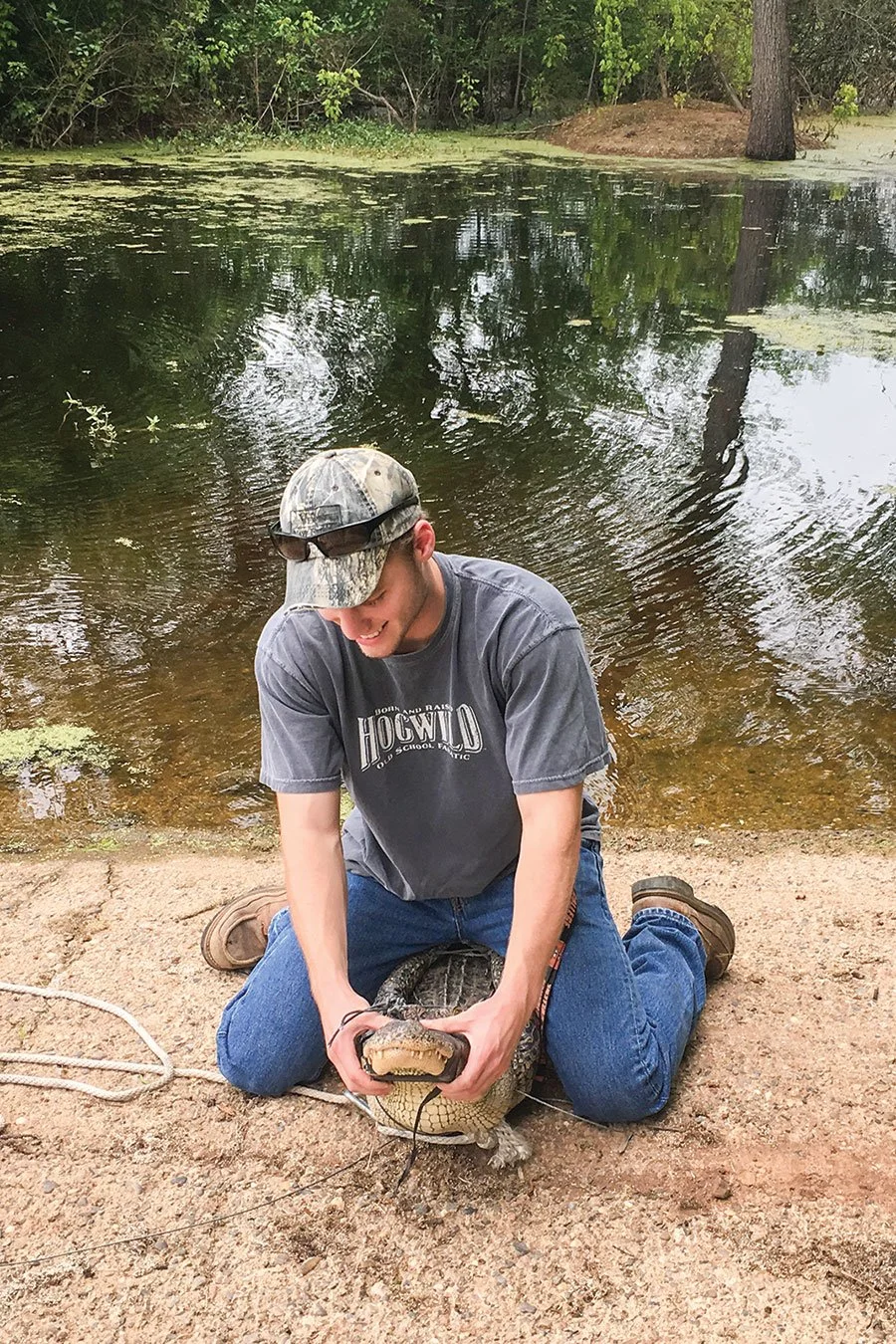
John helped the Arkansas Game and Fish Commission capture and relocate a nuisance alligator from a residential area in 2016. submitted photo.
John remembers attending local Ducks Unlimited banquets with our dad, where people around Texarkana observed John’s growing waterfowl interest. One observer was Tommy Cabaniss, former state chairman of Ducks Unlimited and our neighbor. Tommy suggested that John meet his friend Bob Butler, a senior regional director for Ducks Unlimited, to discuss attending the Ducks Unlimited Greenwing Conservation Camp in Stuttgart, Arkansas. At 15, John spent a weekend at Ducks Unlimited President George Dunklin Jr.’s Five Oaks Duck Lodge, learning about wetland conservation from experts with the Arkansas Game and Fish Commission (AGFC), Ducks Unlimited, and Rich-N-Tone Duck Calls.
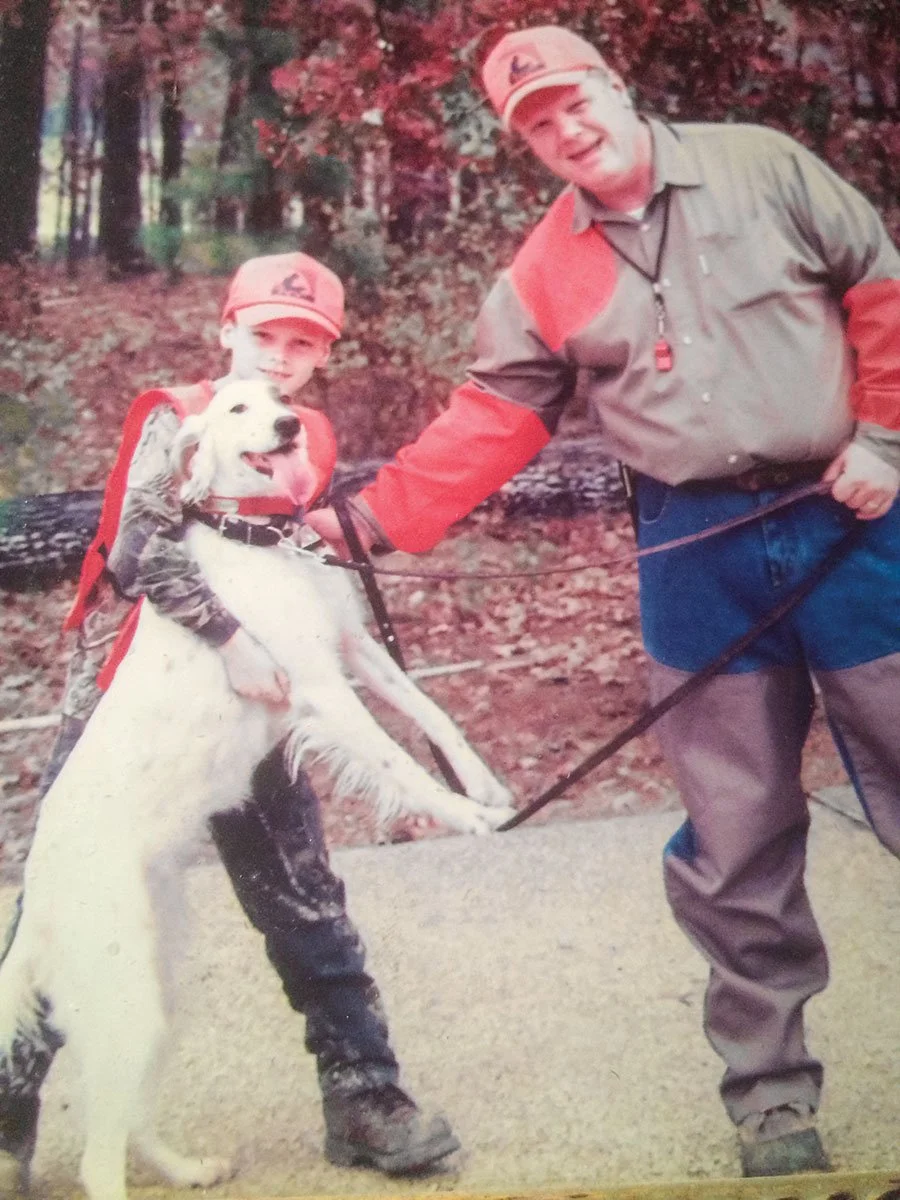
Along with their English setter, Scout, John’s dad, Bob Veon, took him on his first quail hunt in southwest Arkansas. submitted photo.
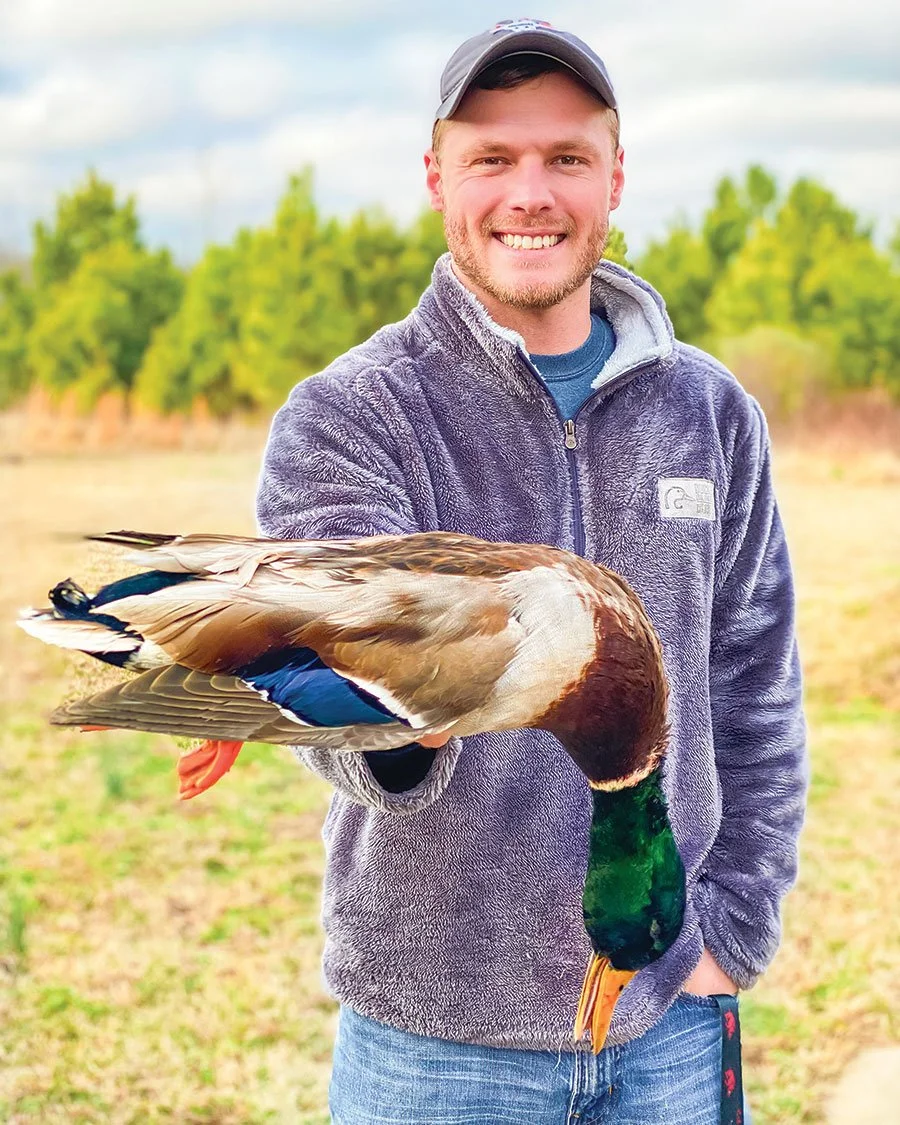
John harvested and weighed mallards at Five Oaks Duck Lodge (owned by George Dunklin in Stuttgart, Arkansas) for his master’s research. submitted photo.
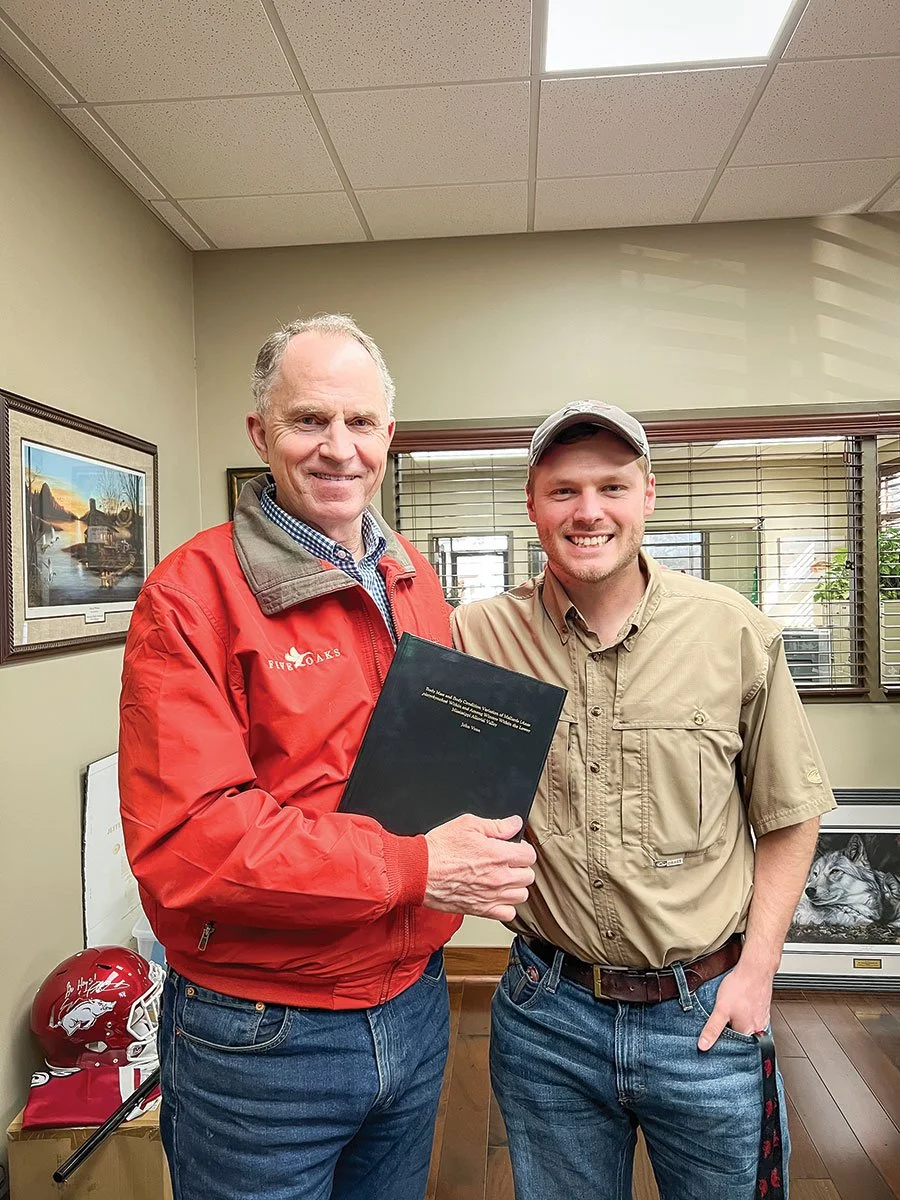
John presented a copy of his master’s thesis to George Dunklin (former AGFC commissioner, Ducks Unlimited president, and owner of Five Oaks Duck Lodge). George hosted the camp that John attended as a high schooler. submitted photo.
“[Greenwing Conservation Camp] was my first exposure to really understanding the practice of conservation and seeing people from all these different realms together in one space,” John said. At the conclusion of the camp, John was named 2012 Camper of the Year, an award voted on by the camp’s staff, which he remembers as a spark in his career journey.
Interestingly, John didn’t channel this experience into a career path until after studying at Hendrix College, where his time was spent playing football and studying for medical school. However, his curiosity continued to draw him back to wildlife. In 2016, John was selected to be the intern for AGFC’s Southwest Office. Like many pre-med students, he also sought out campus research opportunities, and this is where he met Dr. Maureen McClung, professor of ornithology and ecology. She noticed John’s outdoorsman and management experiences and believed they might be of benefit to her lab’s research. Together, John and Dr. McClung developed a study investigating traffic noise disturbance in wintering waterbirds; the results were published in a coauthored paper in the Journal of Wildlife Management.
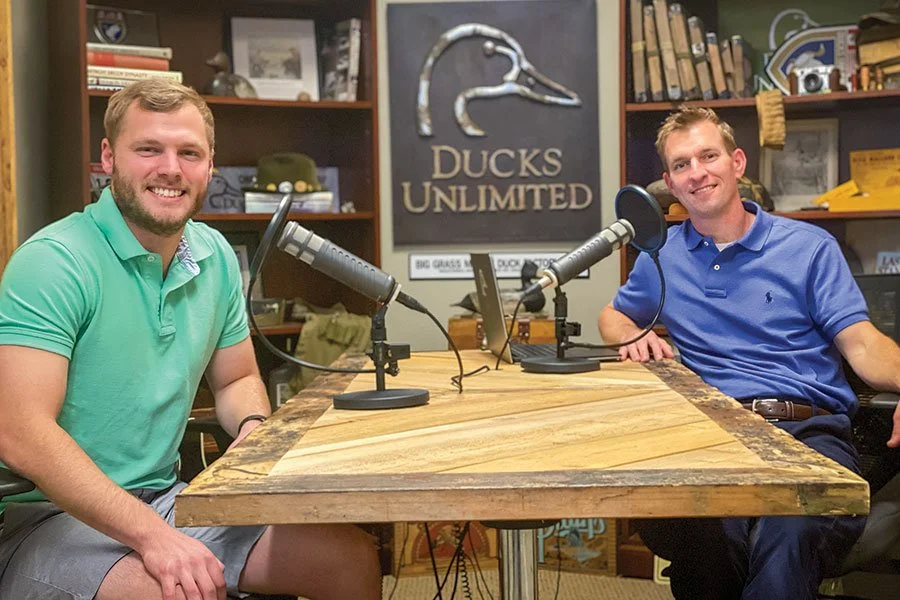
In 2021, John joined Dr. Mike Brasher, senior waterfowl scientist at Ducks Unlimited, on an episode of the Ducks Unlimited Podcast. The episode, titled “Are Arkansas Mallards Fatter Today than 40 Years Ago?” covers John’s master’s research. submitted photo.
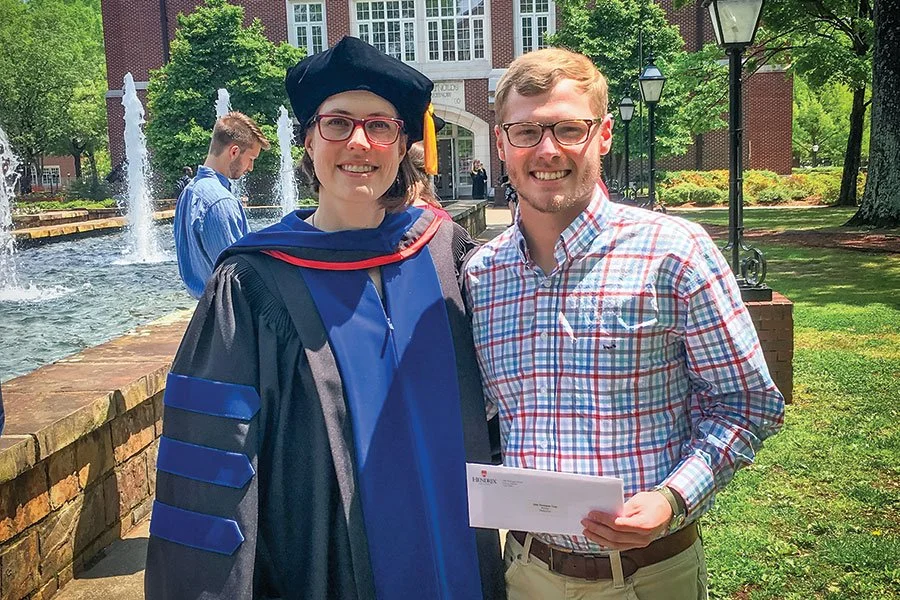
John’s undergraduate research was supervised by Dr. Maureen McClung. The two are pictured here after John was awarded Distinction in Biology. submitted photo.
This experience, along with encouragement from various Greenwing Camp experts John had professionally reconnected with, redirected him from medicine to research. He applied to several programs before landing at the University of Arkansas, where he earned a master’s degree in biology, studying trends in mallard body mass in the Lower Mississippi Alluvial Valley. John continued his work in bridging connections between hunters and scientists within the state under the shared value of conserving the beloved landscape and their species.

John teaches UC Davis undergraduate and graduate students about the importance of wetland management for waterfowl food resources. submitted photo.
In 2021, towards the end of John’s graduate program, mentor and AGFC Chief of Wildlife Luke Naylor connected him to a project being developed by a collaborative team of researchers at the University of California–Davis regarding integrated wetland management techniques for mosquito control and wildlife conservation. John connected the lead researchers on the project before being accepted by the UC Davis Graduate Group of Ecology, one of the top ecology programs in the country. He is now in his fourth year of the project. With his new experiences, John hopes eventually to lead a research lab in applied ecology, with a focus on waterfowl and wetlands.
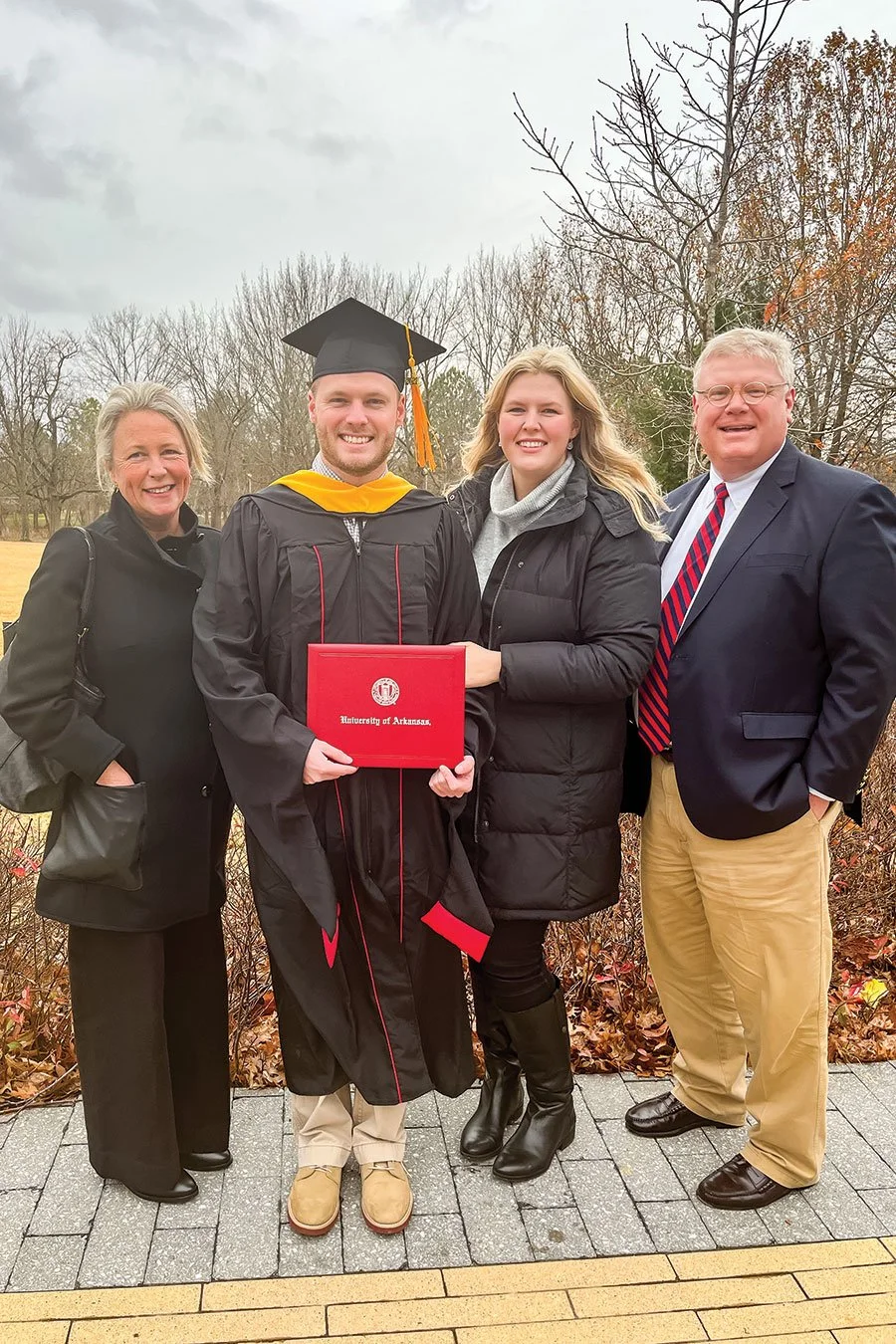
John graduated from the University of Arkansas with his master of science in biology in December 2021. From left to right; Debbie (mother), John, Greer (sister), and Bob Veon (father). submitted photo.
John noted that it was those in Texarkana who made the first observations about his interests and worked to nurture his curiosity. John’s advice to anyone chasing a career in research is to stay curious, open to new ideas, and persistent. “Kind of like a good duck hunt where all the pieces come together—let that hope keep bringing you back,” he said.