
Forged in the Flames
/Almost 18 years after her life-threatening first race, Harli White continues to compete in sprint car driving
By Brandon Shoemaker
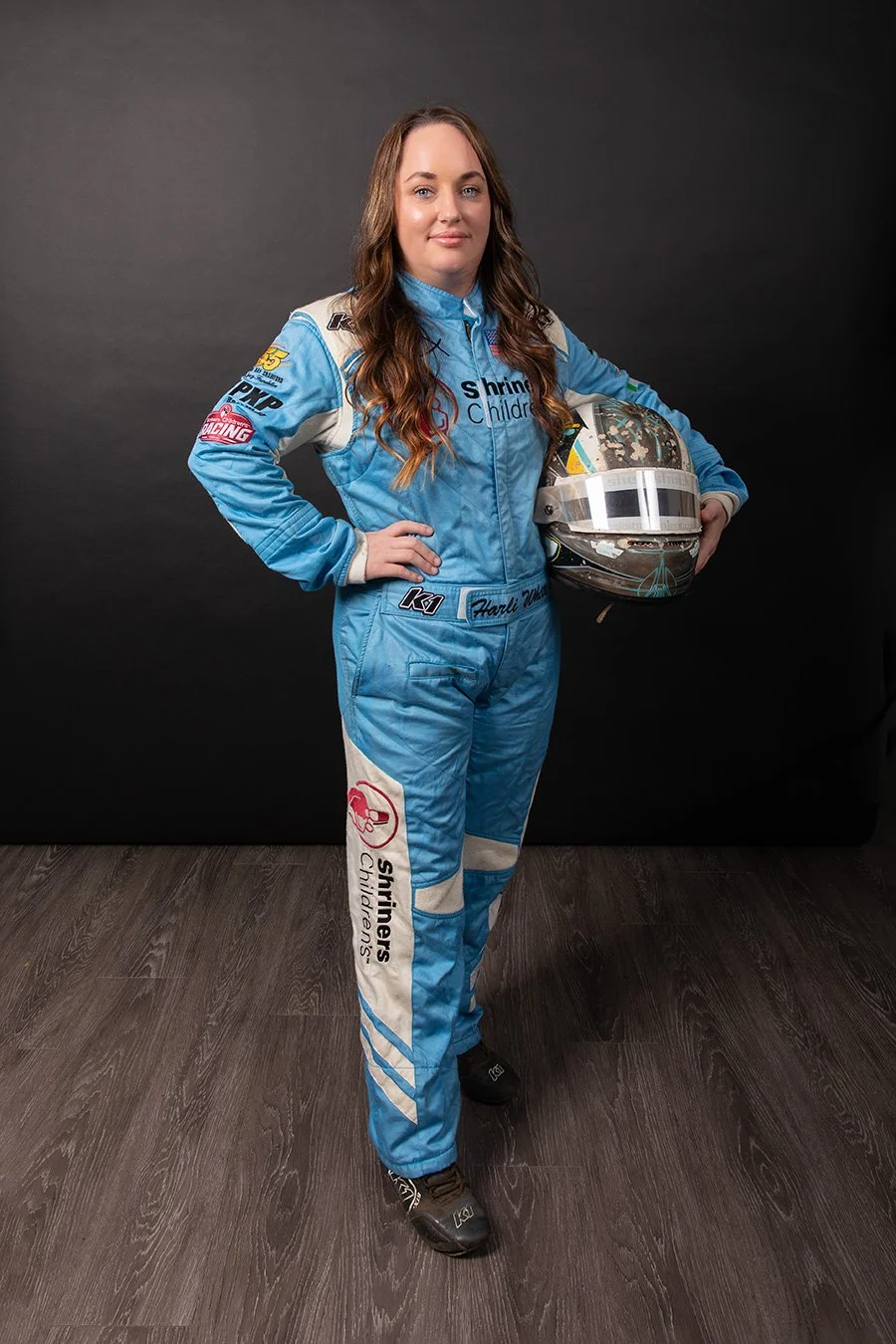
photo by shane darby
Harli White didn’t stumble into racing. She was raised inside the track. Long before she ever strapped into a car, she was in the shop with her dad, learning what most kids never see—how machines come apart, how they go back together, and how a race weekend is built on equal parts discipline and obsession.
“It was family-driven,” Harli said. “My grandfather started racing. My dad followed in his footsteps, my uncles . . . I was always in the shop with my dad working on the car.” That family tradition began with motocross and Saturday-night dirt-track racing. Harli grew up watching “big car” racing—mostly adults, mostly modifieds. Then came the moment that lit her fuse.
As a preteen, she was at a track near Dallas watching her father compete in a major modified event when she noticed something she’d never seen in person: kids racing, suited up and sprinting around like it was the most natural thing in the world.
“I asked my dad, ‘How come those kids can race, and I cannot?’” she recalled.
She walked the pits and the infield like a woman on a mission, found a handful of race cars listed for sale, and brought word of them back to her dad. That Christmas, Santa brought her a race car.
“And that’s all it took,” she said.
“It Just Exploded.”
In 2008, the spring of her first season, Harli entered her first race. She was 12 years old—young enough to still be a kid, but already wired like a racer.
Her family didn’t treat safety like a suggestion. Harli said her dad made her practice getting in and out of the car repeatedly—buckling, unbuckling, shutting off switches—until it was muscle memory. It mattered: the sport she was entering uses a fuel that doesn’t forgive mistakes.
“We’re burning methanol,” she said of the easily flammable fuel. “It burns really clear, so you don’t know that you’re on fire.”
On her very first race day, Harli was actually sick with the flu, but she refused to miss the opportunity.
In the feature race, she began to find her rhythm. She didn’t know the other drivers, and she was one of the only girls on the track. Still, she got more aggressive, putting herself in passing positions—and then, on a corner in front of the grandstands, her car touched the wall and tipped onto its side.
The next part happened fast.
“It just immediately burst into flames,” she said. “No rhyme or reason. It just exploded.”
Harli described trying to do everything she’d practiced: kill the switches, unbuckle, get out. But the car’s position made escape impossible. The car was pinned. Her only exit was through the top—blocked by a wing and swallowed by heat.
She removed her helmet so she could see what was happening. She could hear the crowd screaming. She could hear her father’s cries as he was trying to get to her.
At one point, she said, the car was moved—dragged—while it was still on fire, the flames following. The situation didn’t improve; in fact, it worsened.
Then came a moment Harli described with quiet clarity.
Realizing the dire nature of the situation, she turned her thoughts inward and relied on her faith. “I said a quick prayer,” she recalled, “and I closed my eyes.”
When she opened them again, she saw a figure running toward her.
Another racer, Donnie Ray Crawford, sprinted across the track and pulled her from the burning car. (The act was featured on the Oprah Winfrey Network’s “Extraordinary Acts of Courage” program.) Harli didn’t even know Donnie Ray’s name in the moment; she only knew that someone had reached into hell and pulled her out.
“It was the best part about the whole story,” she said. “A complete stranger saved my life.”
Out of the Fire
Harli was alert and talking as emergency responders worked. She remembers answering questions herself—her allergies, her birthday—because her father was too consumed by shock to speak.
She was taken first to an emergency facility, where her parents pushed for the best option available. Harli said the answer was Shriners Children’s Hospital in Galveston, but it wasn’t a place they could simply show up. Patients had to be accepted.
Thankfully, that acceptance came quickly, propelled by the same kindness of community that surrounds racing. A Shriner who witnessed the accident helped set the process in motion. Harli was flown by private plane to Galveston with her parents. Her first skin graft surgery happened that night, in the earliest hours of morning. She would undergo three skin graft surgeries, all within a short span, followed by a long stretch of recovery and reconstruction.
She spent 21 days in the ICU. Then, she lived in Galveston for months afterward, undergoing a daily routine of therapy and wound care that demanded endurance of a different kind.
“Every morning, I’d have to go to the tub room,” she said. “Therapy twice a day—physical and occupational.”
When she left the hospital, she still had open wounds. Her parents learned how to care for them at home—bandaging, blister management, infection prevention—living in a constant vigilance that caregivers know all too well.
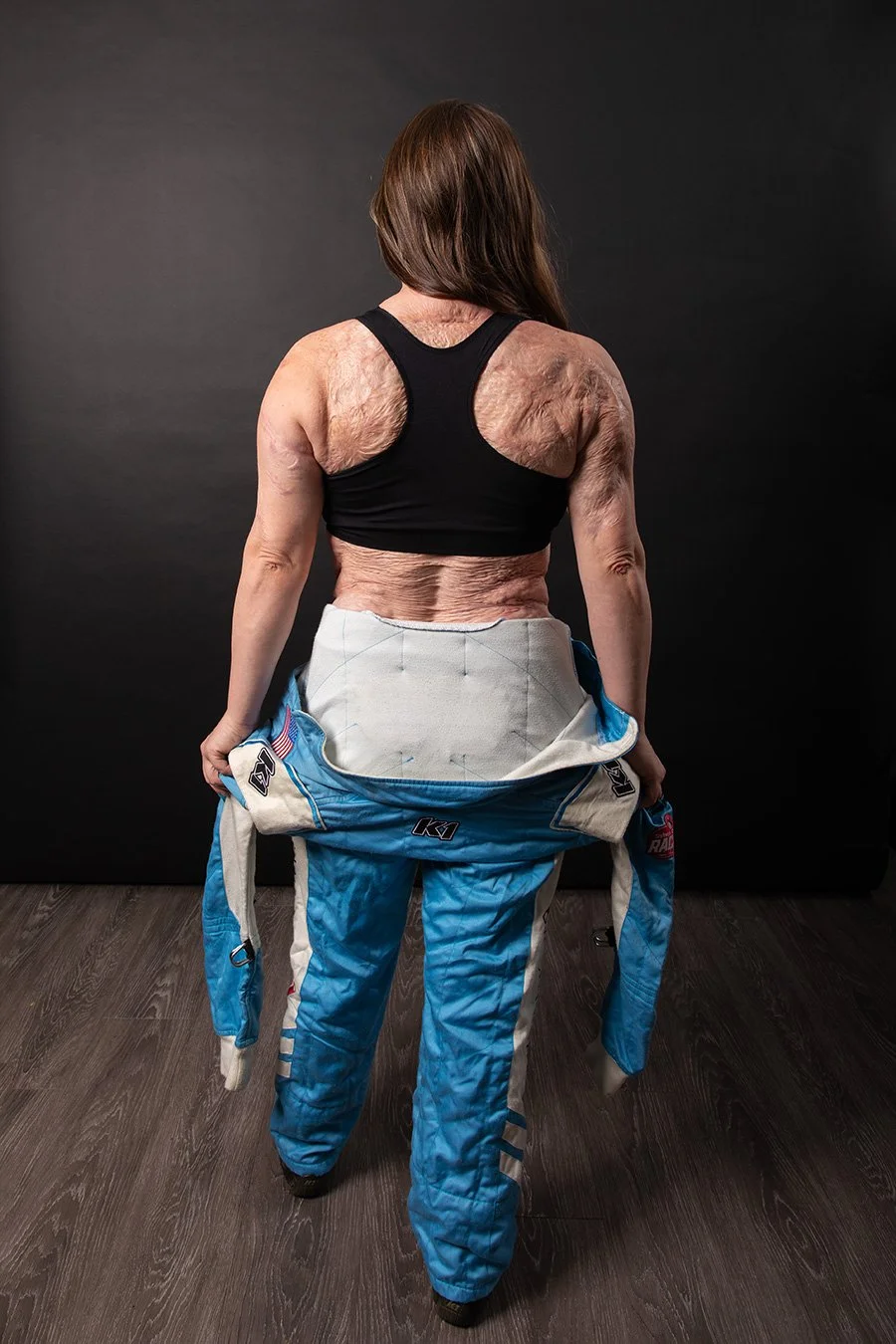
photo by shane darby
Same Place, Next Year
Most people would be done with racing after surviving that kind of trauma. Harli wasn’t.
Even in the hospital, she was asking about her race car and whether it was fixable. Her parents, understandably, avoided the topic. Harli said her mother wanted everything fast and dangerous in their orbit to be sold: race cars, bikes, boats, all of it. On top of fear, her parents faced public judgment—people asking how they could have allowed their child to compete in such a dangerous sport. But Harli remembers being relentless.
“I was bound and determined to get back in that race car,” she said.
She framed it as identity, not hobby. She told her father that racing was part of what would keep her from becoming a depressed teen stuck in her room. She promised to do the work to get better.
She did.
And one year after the fire, she returned—at the same racetrack, in the same kind of car, surrounded by the same people.
Her first year back, she won multiple races. She was competing against future stars, including NASCAR star Christopher Bell, and she wasn’t asking for sympathy.
“I’ve always tried to earn my respect,” she said. “Not, ‘I’m a girl, take it easy on me.’ I’m always going to earn my keep.”
Scars and Confidence
Harli carries deep scars, visible and permanent, but she refuses to treat them like a shameful secret.
“I embrace the scars,” she said. “If you like me, you like me. If you don’t, you don’t.”
She said she wasn’t picked on in school for the scars, and she credits much of that to how she carried herself. In a small town, everyone already knew what happened; there weren’t whispers or mysteries, just a shared understanding of a young girl’s story that nearly ended too soon.
Harli meets curiosity with clarity. When kids see her scars and ask what happened, she tells them. When people stare, she says she understands.
“We all stare,” she said. “If I see someone, I want to know their story.” Her scars don’t isolate her. Instead, they’ve become one of the ways she connects.
“I’m not retired. I don’t want to retire. I still think there’s a lot left in me to give [to the sport].”
Beyond the Accolades
Harli’s racing resume includes major firsts and historic performances: becoming the first female to win the American Sprint Car Series National Tour, ranking high in points, reaching prestigious mains, racing abroad, and traveling for extended periods to compete in Australia.
She spoke about the satisfaction of finally breaking through for a major national win after years of close calls and disappointment.
“It was a relief,” she said. “And it gave me so much confidence. You want more and more of it.”
But in the middle of that success is a frustration familiar to many athletes: timing.
“By the time I got recognized, I was ‘too old,’” Harli said, describing how development pipelines often favor younger drivers.
Still, she doesn’t want to be remembered as a novelty.
“I want to be the best race car driver there is,” she said, “not ‘the best female.’”
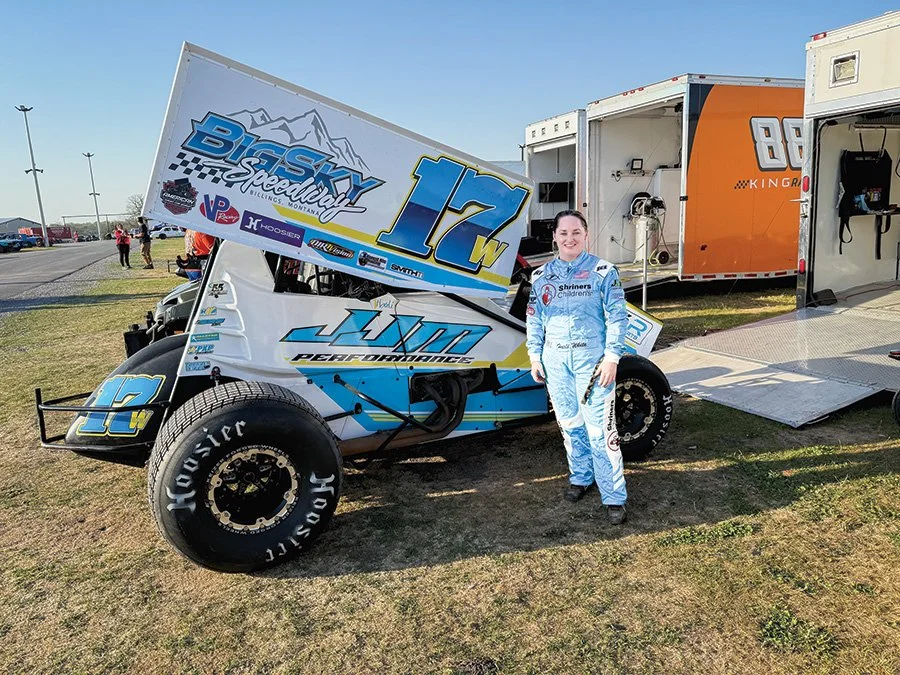
Harli returned to the ASCS National Tour last April at the Salina Highbanks Speedway in Salina, Oklahoma. submitted photo
Life Off the Track
Today, Harli balances racing with a day job and long-term goals beyond the next checkered flag. She works in Texarkana and is continuing her education, finishing a degree in accounting, a goal she delayed while living on the road from race to race.
Public speaking is another lane she’s carved out, especially in connection with Shriners Children’s and burn survivor communities. She’s spoken at fundraisers, schools, churches, and burn camps, without pay, because she sees it as a responsibility, not a side hustle.
Shriners Children’s, she said, made her recovery possible in every way. “I didn’t pay for a single thing,” she said. “It’s funded by donations.”
And because of what she lived through, Harli has become a vocal advocate for safety in racing: proper gear, proper preparation, and respect for what can happen in an instant.
“Everyone has their own scars,” she said. “I have physical scars. I also have internal scars.”
Her message to the public is blunt, and it’s earned. “Where there’s a will, there’s a way,” she said. “Find your purpose.”
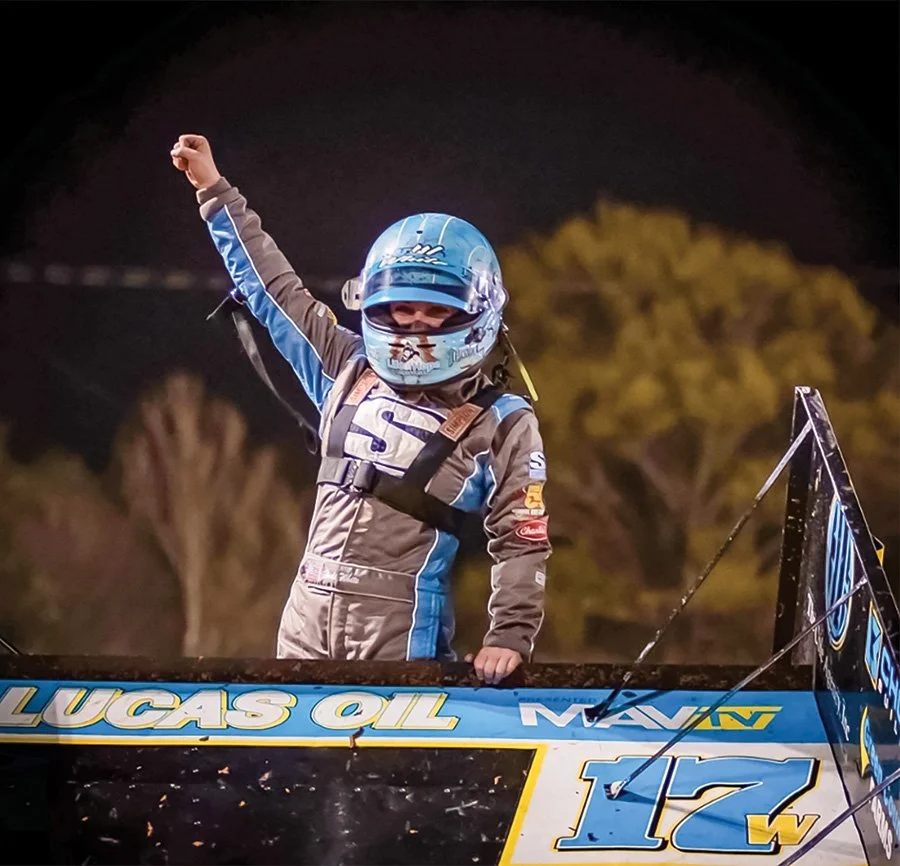
Harli won her first career ASCS victory at the I-30 Speedway in Little Rock, Arkansas, on April, 9th, 2019. submitted photo
The Legacy She’s Chasing
Harli isn’t ready to close the book on racing. She’s candid about the realities—money, equipment, opportunity, and time—but she’s equally firm about what still lives in her.
“I’m not retired,” she said. “I don’t want to retire. I still think there’s a lot left in me to give [to the sport].”
When her racing career eventually does end, she wants to be remembered as more than a story of survival. She wants her legacy to be that of someone who brought something to the track every time she showed up: courage, competitiveness, and a kind of grit that can’t be taught.
She wants to be remembered as an entertaining racer. “Elbows up,” she said. “Fun to watch.”