
Something to Chew On
/
photo by shane darby
All Things Energy
By Scarlett Stussy Chaidez, MCN, RD, LD
“I wish I had that much energy” is a phrase we’ve all heard an adult say while watching an energetic child running around in circles. While work routines, aging, and mundane adult tasks can definitely take a toll on our energy levels, we may be taking for granted that lethargy is the norm. This month, let’s dive deeper into how food and other typical American lifestyle habits are not optimizing our energy levels.
Skimping on sleep:
The National Sleep Foundation recommends seven to nine hours of sleep per night for adults. If you’re not consistently hitting the target, that should be your first goal.
Fueling with food:
Last month, I discussed how carbohydrates are our bodies’ and brains’ most efficient and preferred source of energy. Carbohydrates and sugar digest faster than other nutrients, add glucose to our bloodstream, and then give us a noticeable energy boost. That kid running around in circles probably just ate some Skittles. The candy’s sugar is very quickly absorbed into the bloodstream, which provides lots of glucose to his cells, and now he’s driving his mom crazy. However, I doubt we would be surprised if he’s passed out in an hour. So, while carbs and sugar give us a noticeable energy boost, eating them alone or in highly unbalanced ways can actually lead to a later energy crash (think: post–Thanksgiving meal).
In order to maximize energy levels from food, we can pair carbs with foods that slow down their digestion. This means that the glucose from those carbohydrates will last longer in the body, preventing an energy crash down the road.
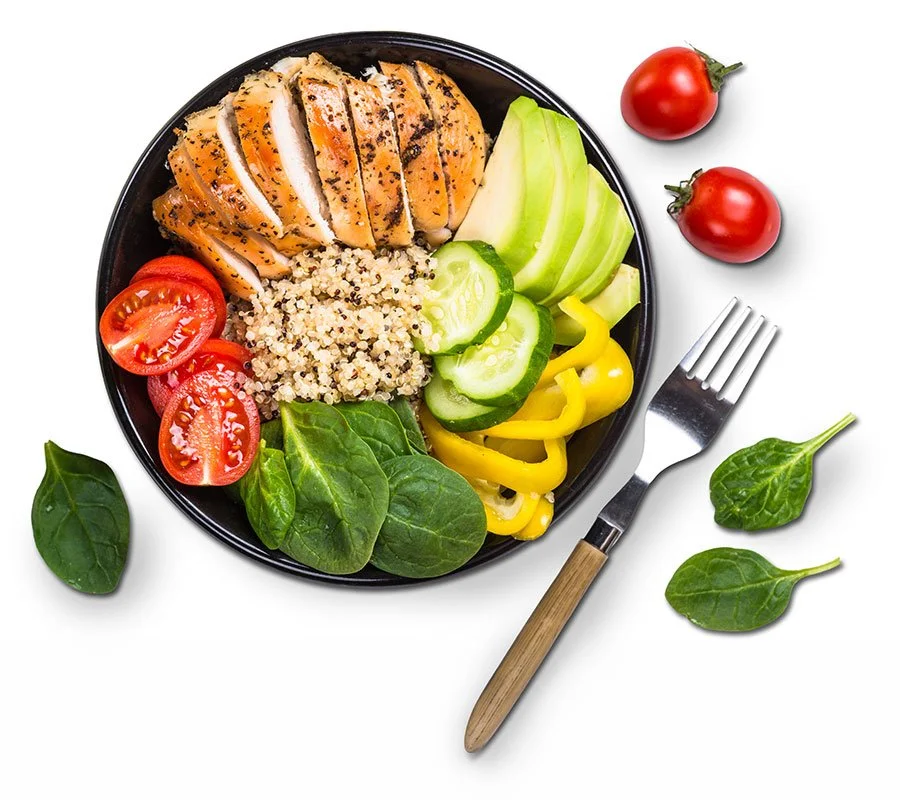
Speaking of roads: picture a four-lane interstate, and imagine letting sports cars take off and drive with no speed limit. These racecars are carb-dense, sugary foods: they digest quickly when they’re left to their own devices. If we let them take off speeding, they give us a quick energy boost—but they run out of gas fast, and we feel tired afterwards. Now imagine if you add 18-wheelers, minivans, and rusty pickup trucks onto that four-lane interstate. The sports cars are not going to be able to maintain their speed because of all the traffic in their way; they will be forced into a slow-and-steady pace. The 18-wheelers are protein, the minivans are fat, and the pickup trucks are veggies. When we pair any of these food groups with sweets and starches, the carbs will take longer to digest and thus provide us with longer-lasting energy.
As I often remind my clients, food is literally energy for our body and cells. Let’s harness that energy in a way that makes us feel good!
Caffeine crashes:
“Why wouldn’t I just use caffeine when I need an energy boost?” Yes, caffeine is a stimulant that can mask low energy levels from other sources—but if what we truly needed was an energy boost from food, once the caffeine wears off, we’re more tired (and hungrier) than before. Plus, stimulants create a vicious cycle, often preventing or interrupting much-needed rest. One of my favorite fun facts about caffeine is that its half-life is about five hours. A substance’s half-life is the amount of time it takes for 50% of the substance to decay or be eliminated. That means that, if I have a cup of coffee with 100 mg of caffeine at 3 p.m. to “fix” my midday energy slump, I will still have 50 mg of caffeine in my system at 8 p.m., 25 mg at 1 a.m., and so forth. If you find yourself drinking caffeine throughout most days, you’re likely not sleeping as well as you could be, which is ultimately making you more tired the next day.
When I first started working at Doherty Nutrition, I had two totally-unrelated clients who both worked full-time jobs and still somehow managed to take midday naps every day. When we started talking about using food for energy, I suggested having an afternoon snack to see how their energy levels would be affected. They each tried my suggestion and never needed a nap again. Like I said earlier, food is energy. So, unless you had a terrible night’s sleep, an afternoon snack (something like peanut butter crackers, fruit with cheese, or a Greek yogurt cup) might be just as effective as a coffee run (especially if you haven’t eaten in the last 3–4 hours).
Exercising energetically:
Moving your body is the most well-researched and least-debated healthy habit I can think of. It gets blood flowing, creates endorphins that improve our moods, lowers cholesterol and triglyceride levels, helps manage blood sugar trends, increases metabolism, prevents muscle loss with aging, and can even improve cognition and prevent dementia. A lot of people say that if they had more energy, they would increase their activity level, but often, it works the other way around. To paraphrase Isaac Newton, a body in motion stays in motion. Energy creates energy.
Starting with tiny movement goals helps us create our movement routines. Then, once movement is in our routine, we realize how much better our body feels, and we want to stay in that routine. Although 150 minutes of moderate activity is generally recommended each week, I recommend starting with much less and working your way up. Also, “exercise” doesn’t have to be at the gym. Let me say it louder for the people in the back: CHOOSE ACTIVITIES YOU ENJOY. Otherwise, you won’t realistically stick with it (and you’ll be miserable!). Swim, dance, rollerblade, play pickleball, walk with a friend, do yardwork—do whatever works for you.
The topics we covered seem pretty obvious, but that’s because they’re so foundationally important for energy. It doesn’t have to be complicated. Instead of searching for “hacks” or supplements to give you more energy, take it back to the basics: sleep, eat, limit caffeine, and move.