
The Four States Fair
/
A tradition built by generations
By Dr. Robin Rogers
The Four States Fair wasn’t built by one person. It was built by generations of local people who treated it almost like a family responsibility—people who showed up, worked hard, passed along what they knew, and, when their time came, handed the reins to someone else.
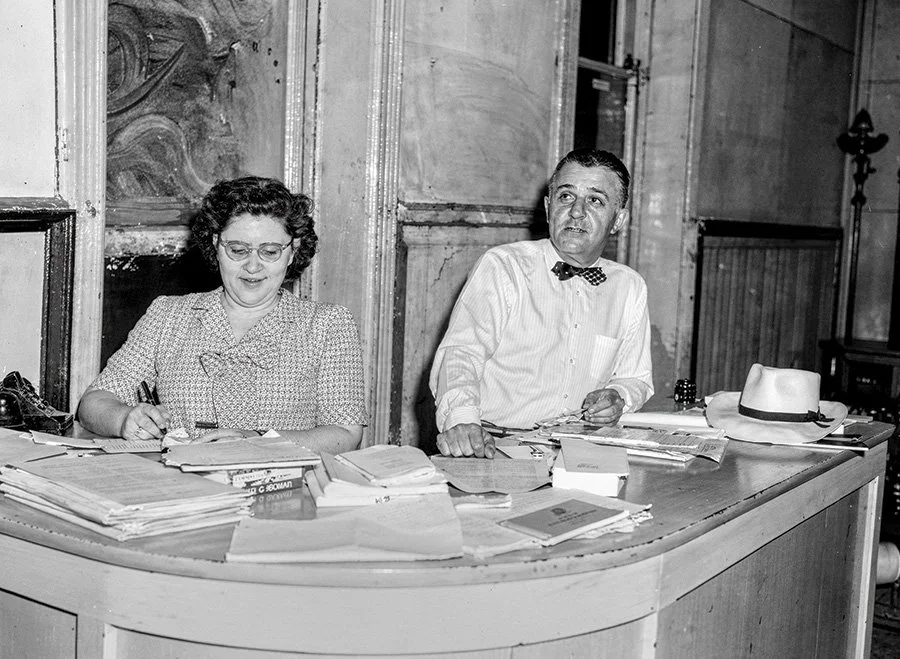
In 1945, the first Four States Fair & Rodeo was opened in Spring Lake Park. Here Teresa Fumagalli assists the organization’s first president, Judge E. Harold Beck.
That may be the best way to understand how an event that began in 1945 has become such a lasting part of Texarkana.
The official story begins at Spring Lake Park, where the Four States Fair & Rodeo was chartered and organized on March 6th, 1945. Even then, the idea of a regional fair and rodeo was already familiar to local residents: there are records of a “second annual rodeo” held on September 19th, 1941, at Texarkana Baseball Park. Sponsored by the Four States Livestock Association, the event featured bronc riding, bulldogging (steer wrestling), calf roping, and bull riding. Between the competitions, a performer named Charlie Schultz entertained the crowd with trick riding, fancy roping, and other stunts.
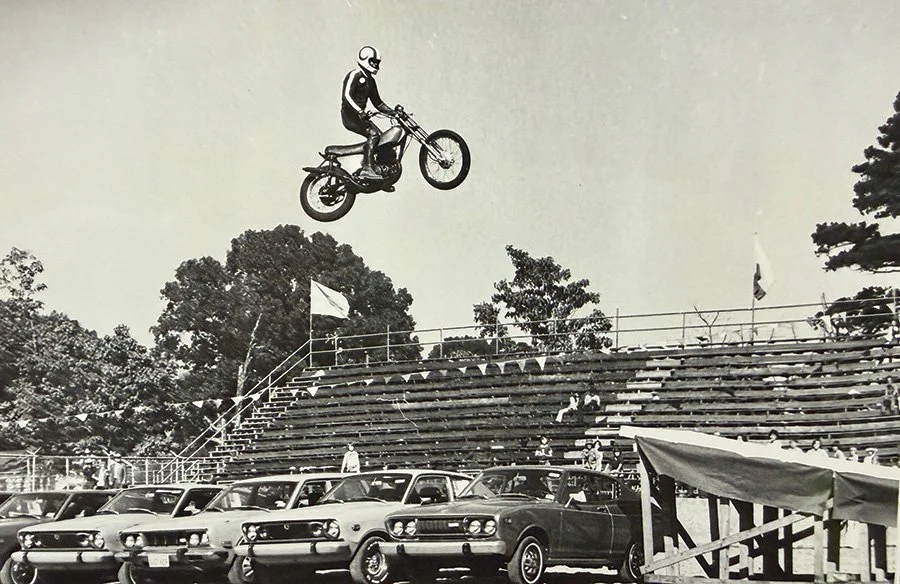
During the golden era of daredevil entertainment (1970s), a motorcycle stuntman practices jumping cars.
According to longtime local memories, there also may have been an unofficial fair held in the College Hill area before the organization of the Four States Fair. Lisa Garner, the fair’s executive director, has heard those stories from people who remember Texarkana in the 1940s.
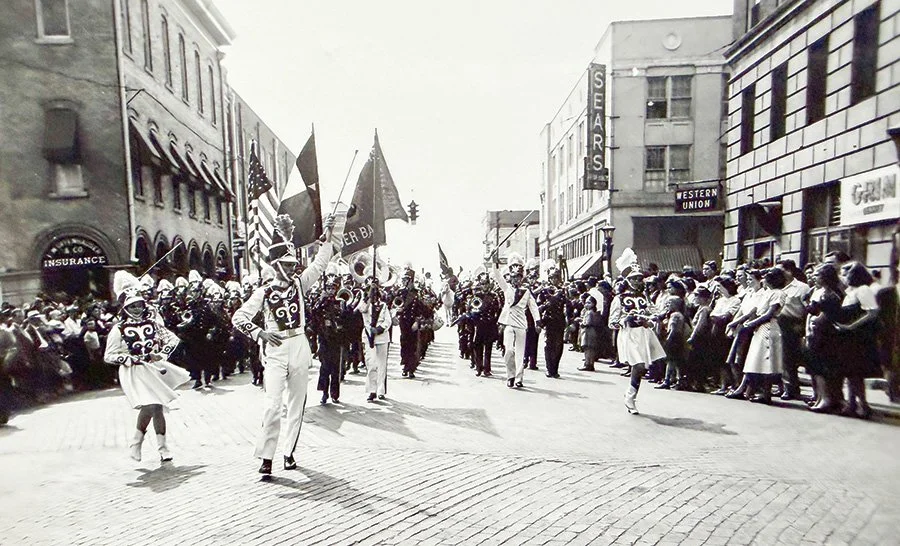
For decades, the fair celebration began in downtown Texarkana with a grand parade connecting the two states. It included marching bands, floats, antique automobiles, horses, Shriners, and civic organizations.
But 1945 was when things became official for fun in Texarkana. The war was over, and Texarkana was ready for something to celebrate. The first official Four States Fair & Rodeo opened at Spring Lake Park on October 9th, 1945. The occasion began with a downtown parade that wound through the two Texarkanas, complete with rodeo horses, highway patrolmen, school bands, fire department equipment, Boy Scouts carrying the flags of the United Nations, Girl Scouts, and civic groups. It was a grand beginning for what organizers hoped would become a permanent regional institution.
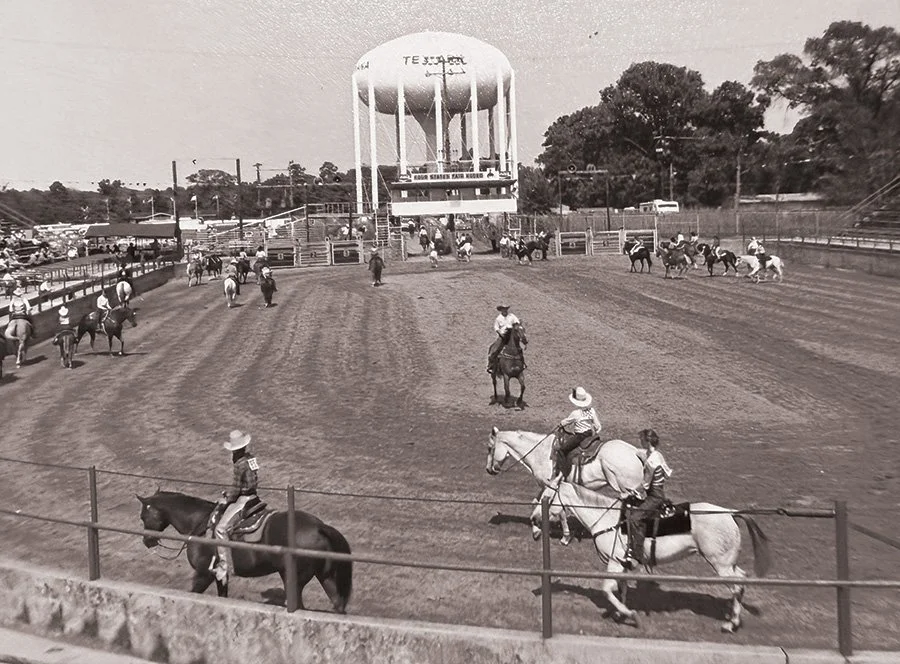
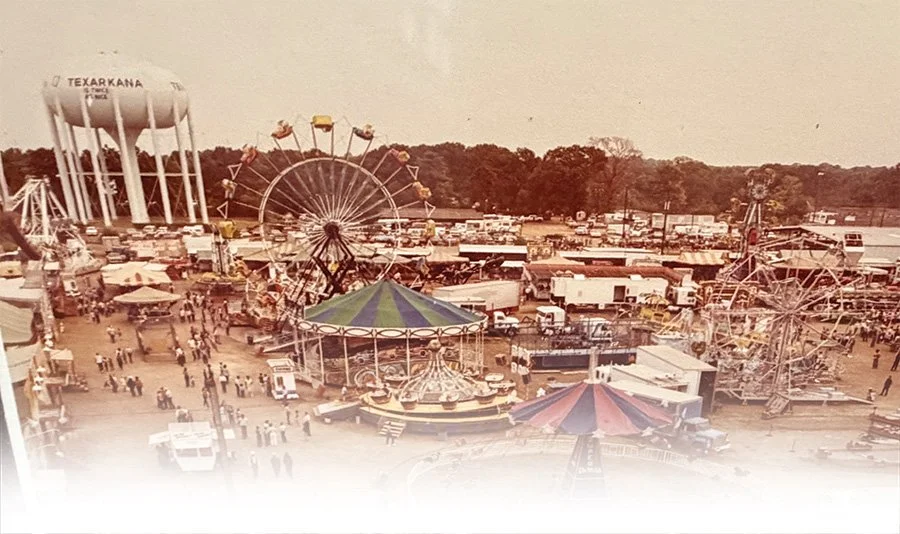
From 1945 until 1984, Spring Lake Park was home to the Four States Fair and Rodeo. This view captures the rodeo arena with the landmark Texarkana water tower standing in the background.
The fair drew enormous crowds almost immediately. In its inaugural year, more than 10,000 people passed through the gates on opening day, followed by thousands more during the week. Organizers had expected more than 50,000 visitors, but the crowds were large enough to create traffic problems and require additional ticket and office workers. The road into Spring Lake Park had been paved only a month earlier. Extra buses ran from downtown every 20 minutes, and people arriving by car could park inside the fairgrounds for 25 cents.
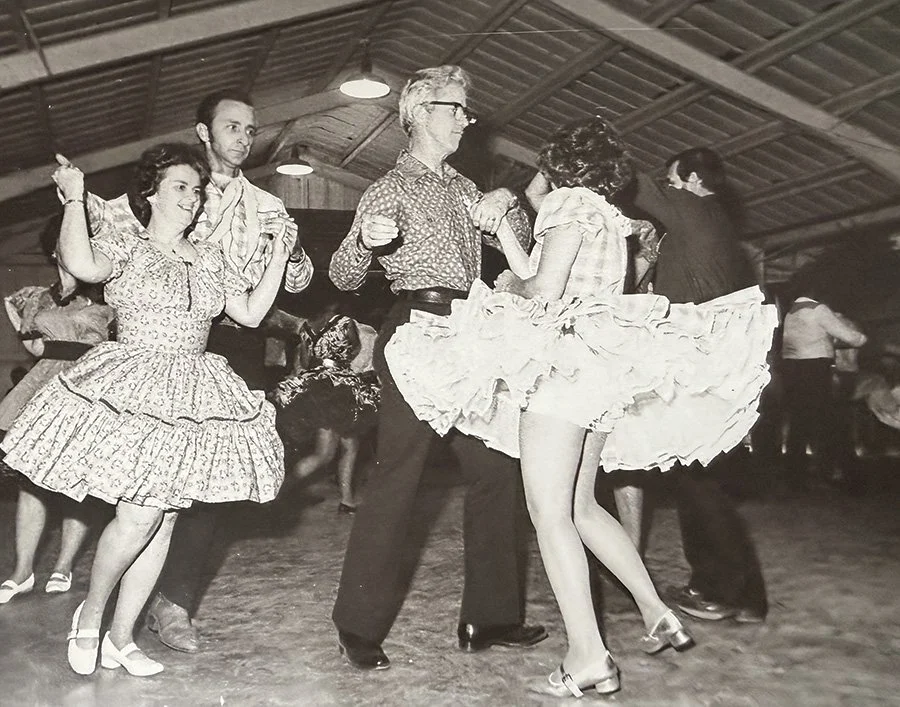
Once the sun went down, music and dancing provided a different kind of entertainment during early fairs. Square dancing was wholesome, social, and very much part of the fair’s culture.
The fair was entertainment, certainly, but it was also intended to be something more. Agriculture was at its heart. Livestock competitions brought in respected judges from throughout the country, and agricultural exhibits gave local farmers an opportunity to see what their neighbors were producing.
Between 1945 and the mid ‘60s, the fair was a place to learn, compare, compete, and go home with new ideas. People eagerly anticipated the early fall, when the amusement park rides began going up in Spring Lake Park, and people gathered everything from artwork and canned goods to prized animals for competition.
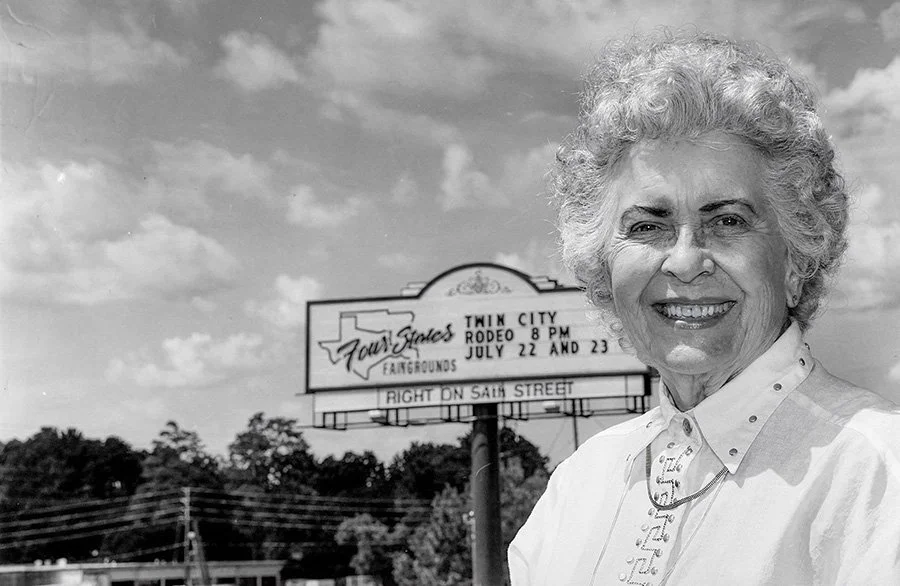
Ida Lou Ames served as the home arts director from the very beginning. The Ida Lou Ames Home Arts Building was named in her honor.
As Texarkana grew, so did the fair. Eventually, the very infrastructure designed to connect the region changed the fairgrounds forever. In 1967, Interstate 30 cut through Spring Lake Park. According to a historical marker, construction of the interstate substantially reduced the amount of land available in the park and changed the character of the grounds. Even while people had grown accustomed to Spring Lake Park being the location of the annual event, the writing was on the wall. By the mid ‘70s, all realized that the Four States Fair needed a new home. In 1979, 104 acres west of Loop 245 and south of I-30 were deeded to the fair for relocation, including a substantial amount of acreage for parking. Building on this property would give organizers more room for events and parking—and a chance to grow into the future, with endless year-round opportunities. In the 1980s, the Four States Fair moved to what is now Bobby Ferguson Park.
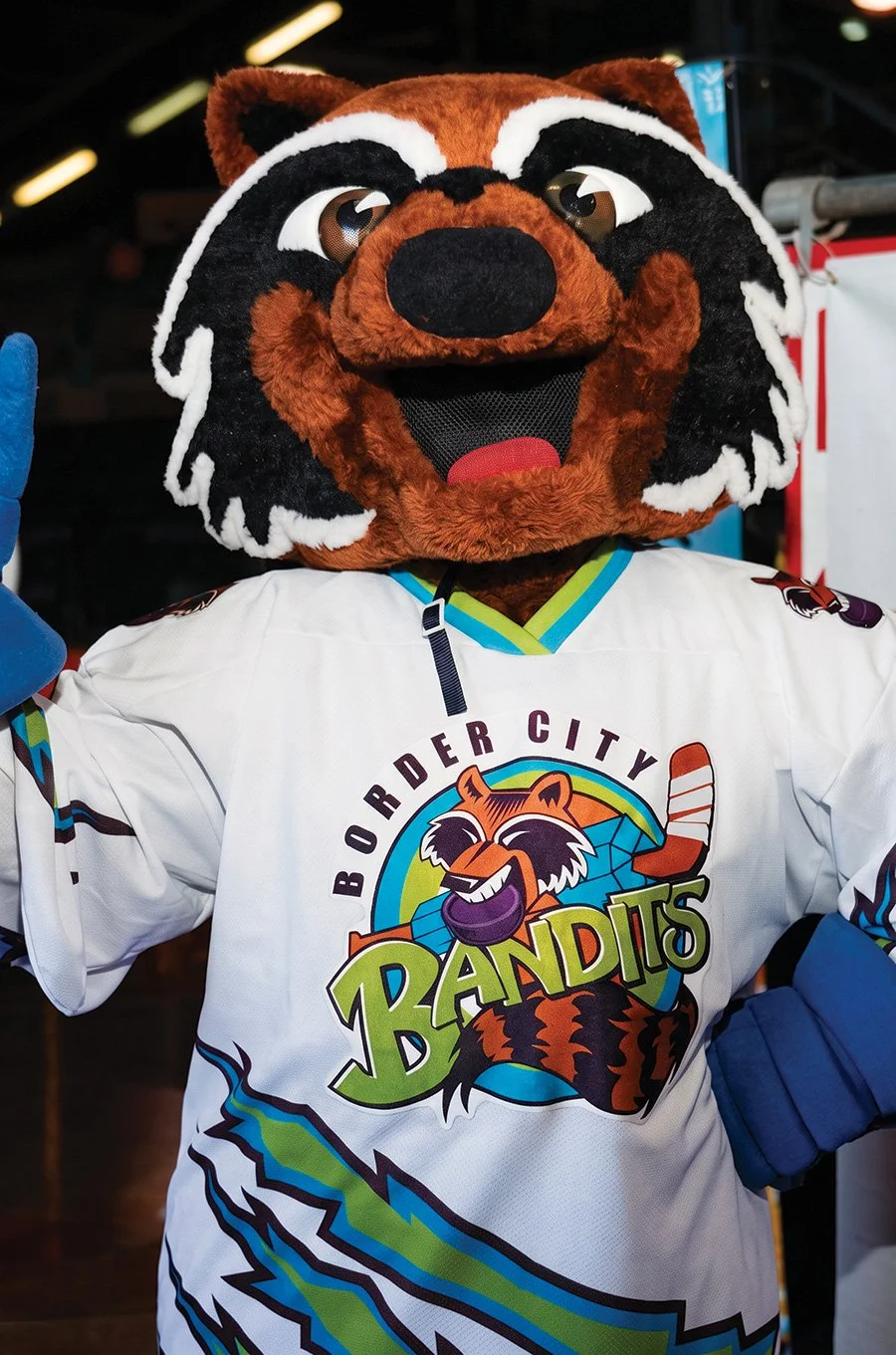
The fairgrounds became an ice rink for the Border City Bandits in the early 2000s.
One of the earliest documented leaders was J.A. Whyte, who served as president when the organization was established in 1945. By 1948, local newspapers reported changes in the organization’s leadership, including Judge E. Harold Beck succeeding Whyte as president. Over the decades, other names became part of the fair’s history. By the 1970s, Marion Reed was identified as the fair’s general manager. In 1971, Betty Nix came to work at the fair to help out her friend, Marion—and that is where one of the most remarkable family connections in the fair’s history begins. Betty spent 51 years working with the Four States Fair in a leadership role. Then her daughter, Danette Perkins, followed her mother, devoting 38 years to the organization. And then came Danette’s daughter, Lisa Barr Garner.
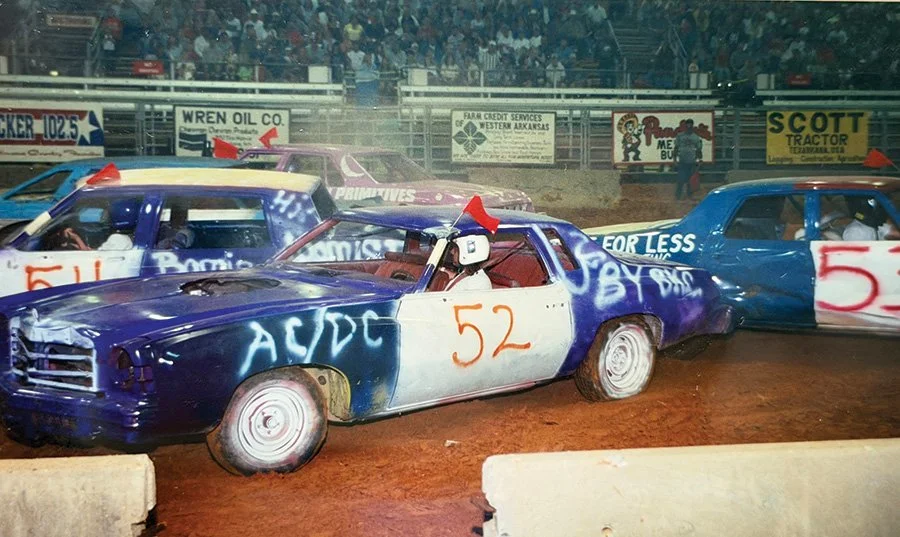
Nothing says fair-time excitement quite like a demolition derby.
Lisa’s relationship with the fair started long before she had a title. She was first a little girl answering phones and helping wherever she could. Lisa grew up around the fairgrounds, watching her mother and grandmother work, learning piece by piece how the organization functioned. Today, Lisa is approaching 30 years of leadership with the fair and serves as the CEO, overseeing the operation and most of the events that take place on the grounds throughout the year.
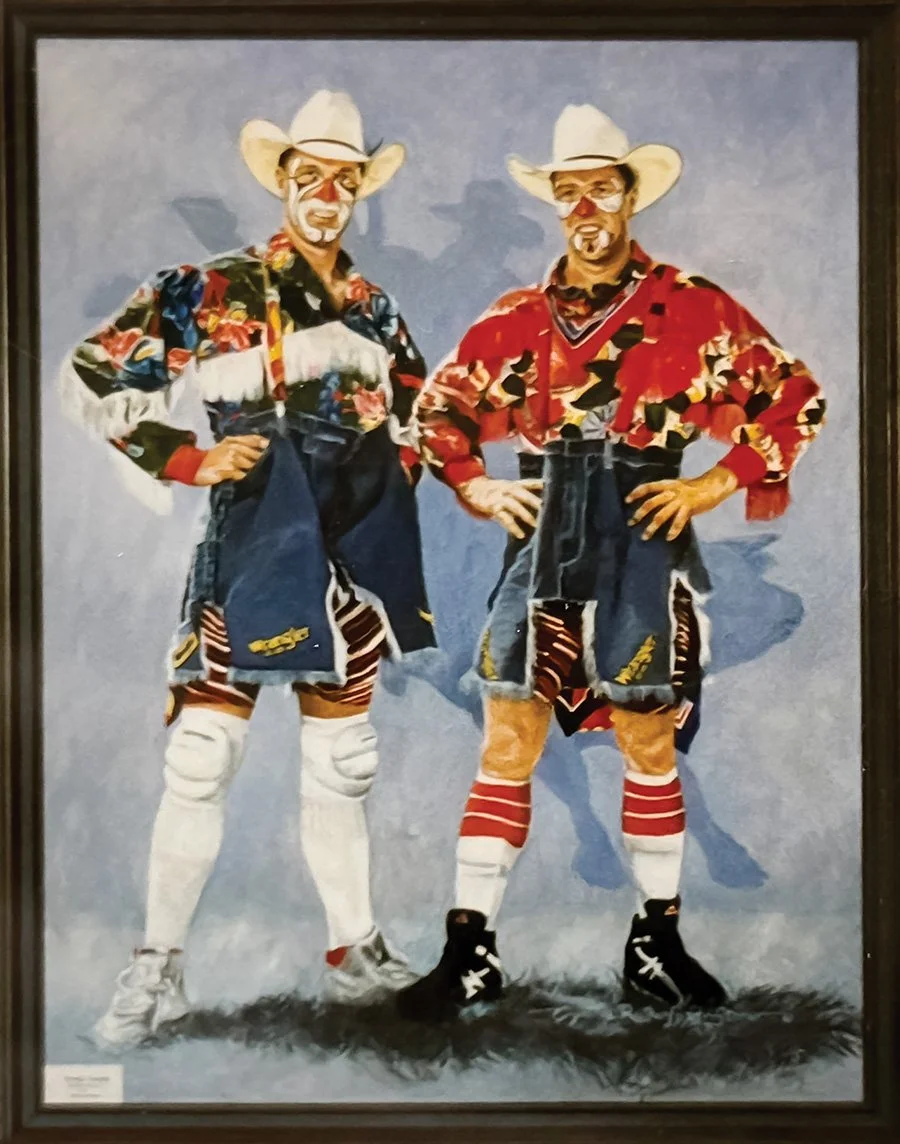
Cynthia Rutherford-Stone painted and showcased her depiction of rodeo clowns well-known to Texarkana: Ronnie and Donnie Sparks.
These three generations of strong women equaled over a century of combined family connection to the fair. Many others helped Lisa as she grew to her current position. Dwight Duncan, a longtime director and former leader of the fair, looked out for and helped Lisa learn the business during the 2000s. Even now, when Lisa has a question that her mother or grandmother can’t answer, Dwight is her “go-to” person. Institutional knowledge hasn’t been simply written down in a manual and handed over; it has passed from one generation to another.
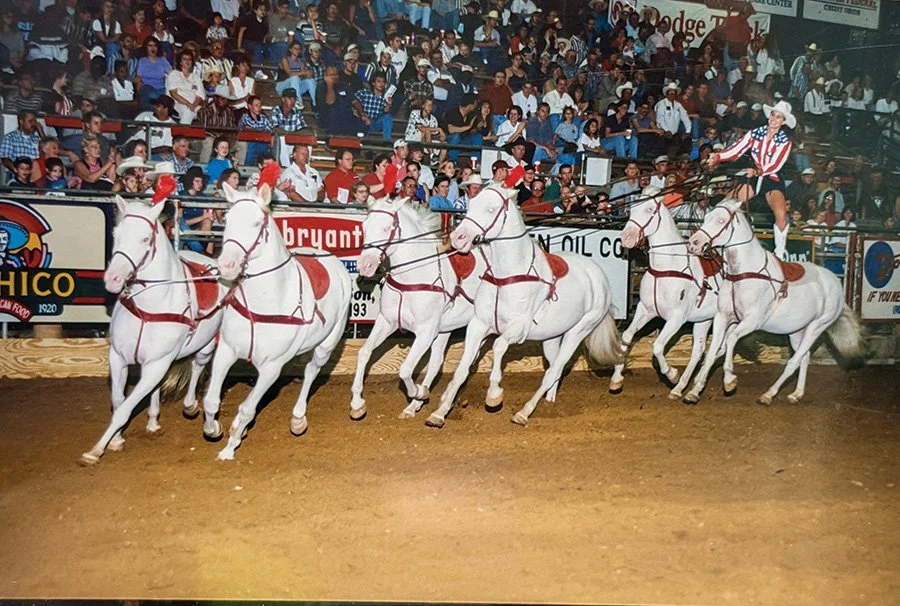
In a breathtaking spectacle of balance, skill, and showmanship, a daring performer takes the reigns while Roman riding.
Lisa inherited an organization with a tremendous history, and she has helped expand what the Four States Fairgrounds means for Texarkana. The annual fair and rodeo, which draws 100,000 to the region each spring, is only one aspect of the organization. Events such as barrel racing, roping, cutting, and other horse-related competitions bring competitors and spectators throughout the year. The fairground complex includes a 70,000-square-foot arena with 4,794 permanent seats, a fine arts building, and an agricultural learning center. The property hosts entertainment events, competitions, community gatherings, and educational programs through every season. That expansion is one of Lisa’s most important contributions to the fair’s continuing story.
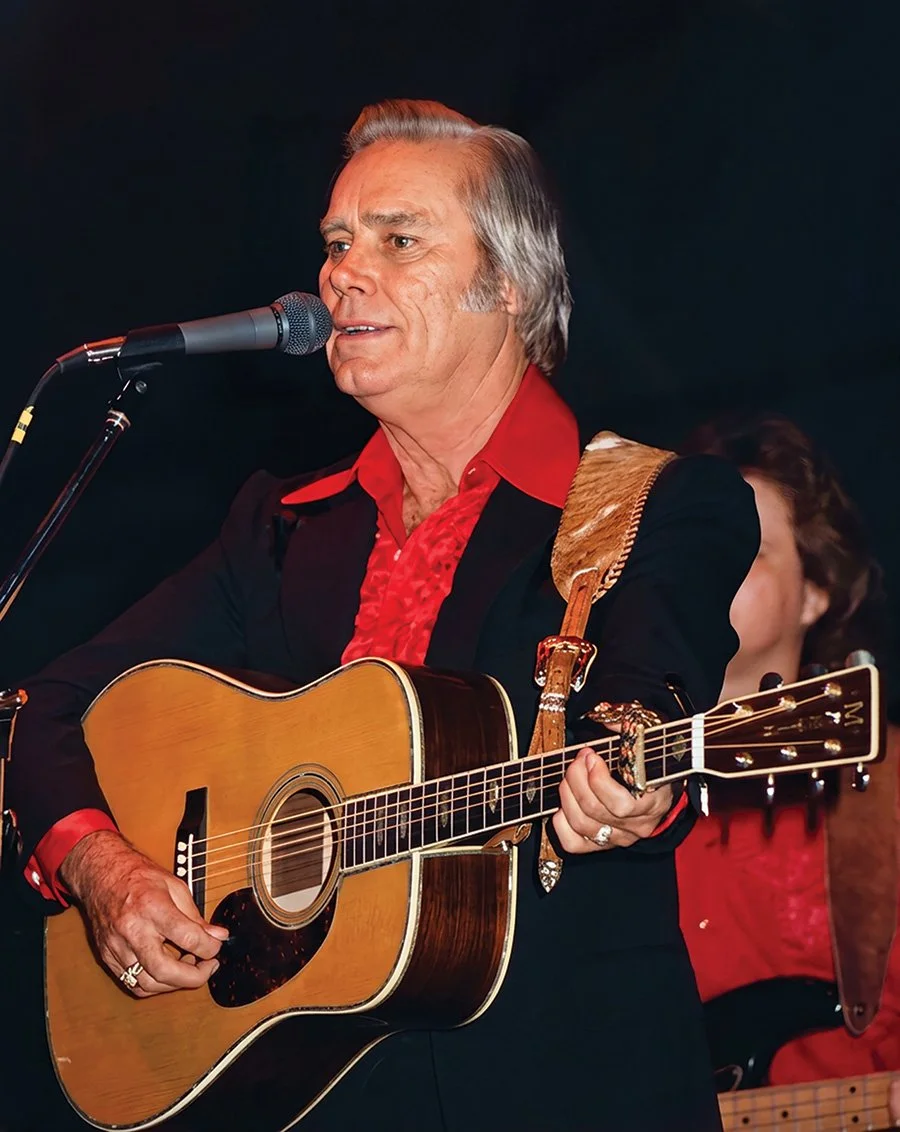
The arena/entertainment center opened in 1985 and gave the fair the ability to bring in bigger performers, such as George Jones in 1992.
“My goal was to make the property useful 365 days a year,” she said. “When we started in 1945, the original idea was to put agriculture, education, and community together. Over the years, we have implemented that plan, and the original founders would be amazed at what happens here year-round. Today, we have a fair, a rodeo, livestock shows, an equine center, youth programs, an ag learning center, community events, and a lot of entertainment.”
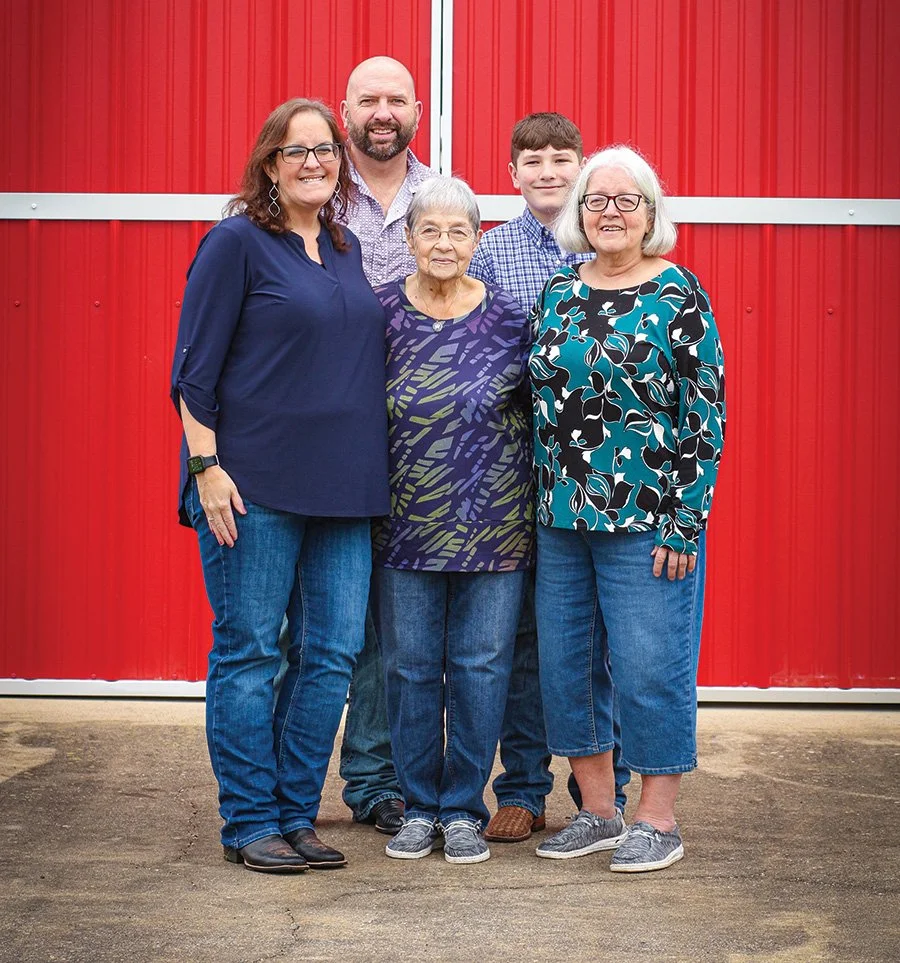
CEO Lisa Garner is the third woman in her family to run the fairgrounds. Here she is pictured with her grandmother Betty Nix and mother, Danette Perkins. Behind them stand Lisa’s husband, Paul, and son, Dawson.
In 2026, the organization is much more than the annual 10-day event. It has survived changing times, an interstate highway, a relocation, and generations of change. Programming has broadened because the community’s needs and interests grew. And through all of it, generation after generation kept showing up. That’s how community institutions survive—not simply because someone wrote down their history, but because somebody cared enough to learn it, and somebody else cared enough to carry it forward. Generations of Texarkanians grew up with the fair. Thankfully, the next chapter is being written by Lisa Garner and a group of people who respect the past as they plan for the future.
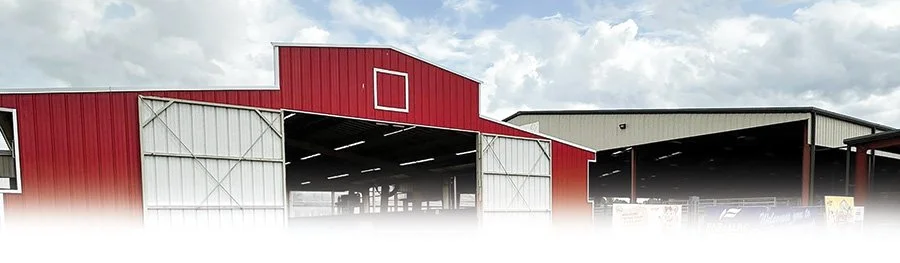
WHERE THE FARM MEETS THE CLASSROOM
When the Four States Fair began more than 80 years ago, agriculture was a familiar part of everyday life. Many families had direct connections to farms, livestock, and the people who produced their food. Today, that connection is not always as obvious to children. That is where the Four States Fair Ag Learning Center comes in.
Opened in 2006 as the first facility of its kind in Arkansas and the four states region, the Ag Learning Center provides year-round, hands-on agricultural education for children and families, and the educational programs are free.
“We’re really a year-round agricultural classroom,” said Kristen Larey, director of the Ag Learning Center. “We welcome school groups, childcare centers, homeschool groups, summer programs, and other youth organizations throughout the year, and our goal is to make agriculture understandable and exciting for children.”
Kristen brings a teacher’s perspective to the job. She has a degree in education and spent years in a traditional classroom before becoming director.
“I don’t want children to simply walk through and look at displays,” she said. “I want them to touch, explore, ask questions, make something, and experience agriculture for themselves.”
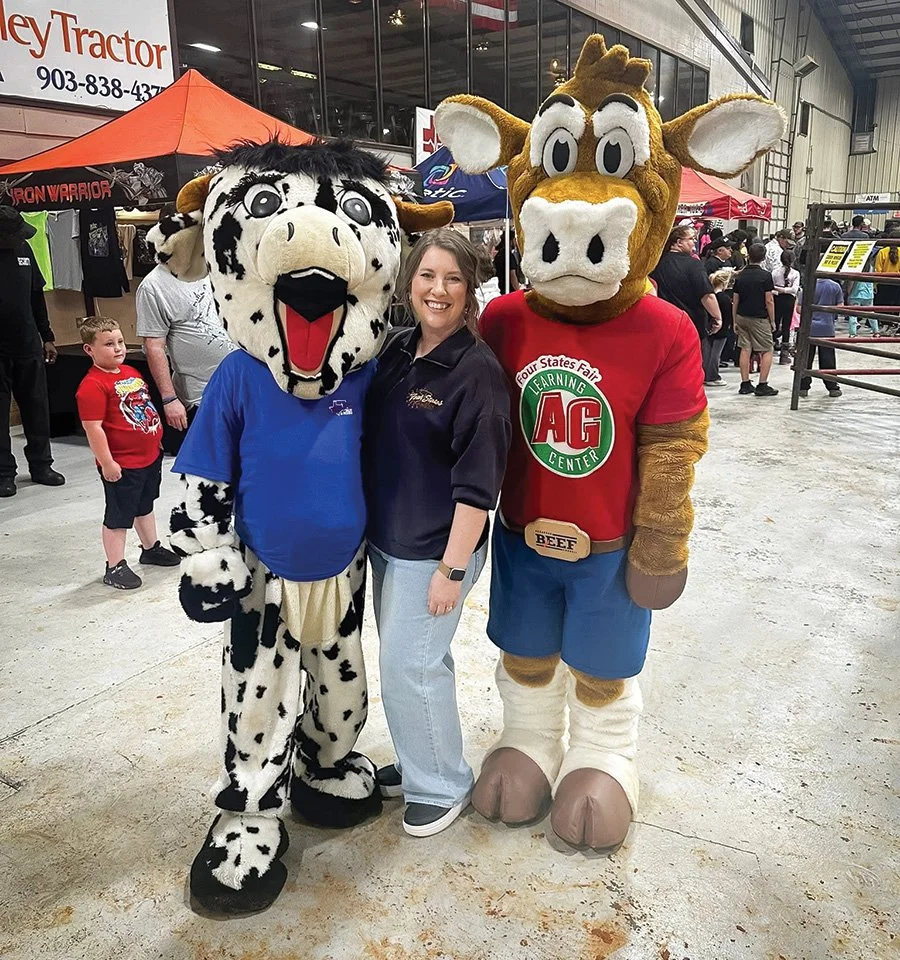
Former classroom teacher Kristen Larey is the director of the Ag Learning Center.
The lessons change throughout the year and cover everything from crops and livestock to pollination, soil, food production, and agricultural by-products. Children learn about beef cattle, soybeans, corn, grain sorghum, catfish, dairy, poultry, and natural resources, all while discovering how agriculture affects their everyday lives. One of the center’s most popular experiences is its milking simulator, which gives children an opportunity to try something many have never experienced firsthand.
“For many children, their understanding of agriculture begins and ends with the grocery store,” Kristen said.
The center helps children make the connection between the products they use and the agricultural industry behind them. They learn that agriculture isn’t simply about growing crops or raising livestock. It encompasses science, technology, transportation, business, food production, and a wide variety of careers.
“We want children to understand that you do not have to own a farm to have a career in agriculture,” Kristen said. “There is a place in agriculture for so many different talents.”
A child interested in animals might someday become a veterinarian or animal nutritionist. Another who enjoys science might pursue agricultural research or food science. Others may find opportunities in engineering, equipment technology, transportation, marketing, or education.
Helping students understand the connection between agriculture learning and real-world applications is important to Kristen.
“I want children to understand that a hamburger doesn’t begin at a restaurant, catfish doesn’t begin on a dinner plate, and food doesn’t begin on a grocery store shelf,” she said. “There are people, animals, crops, natural resources, science, and an incredible amount of work behind what we consume every day.”
The Ag Learning Center was a natural addition to the Four States Fair in 2006. Agricultural education had long been part of the Four States Fair from its earliest days. The original fair gave farmers and stockmen a place to exhibit their livestock and crops while allowing visitors to see, learn, and discover new agricultural practices. The Ag Learning Center carries that tradition into the present.
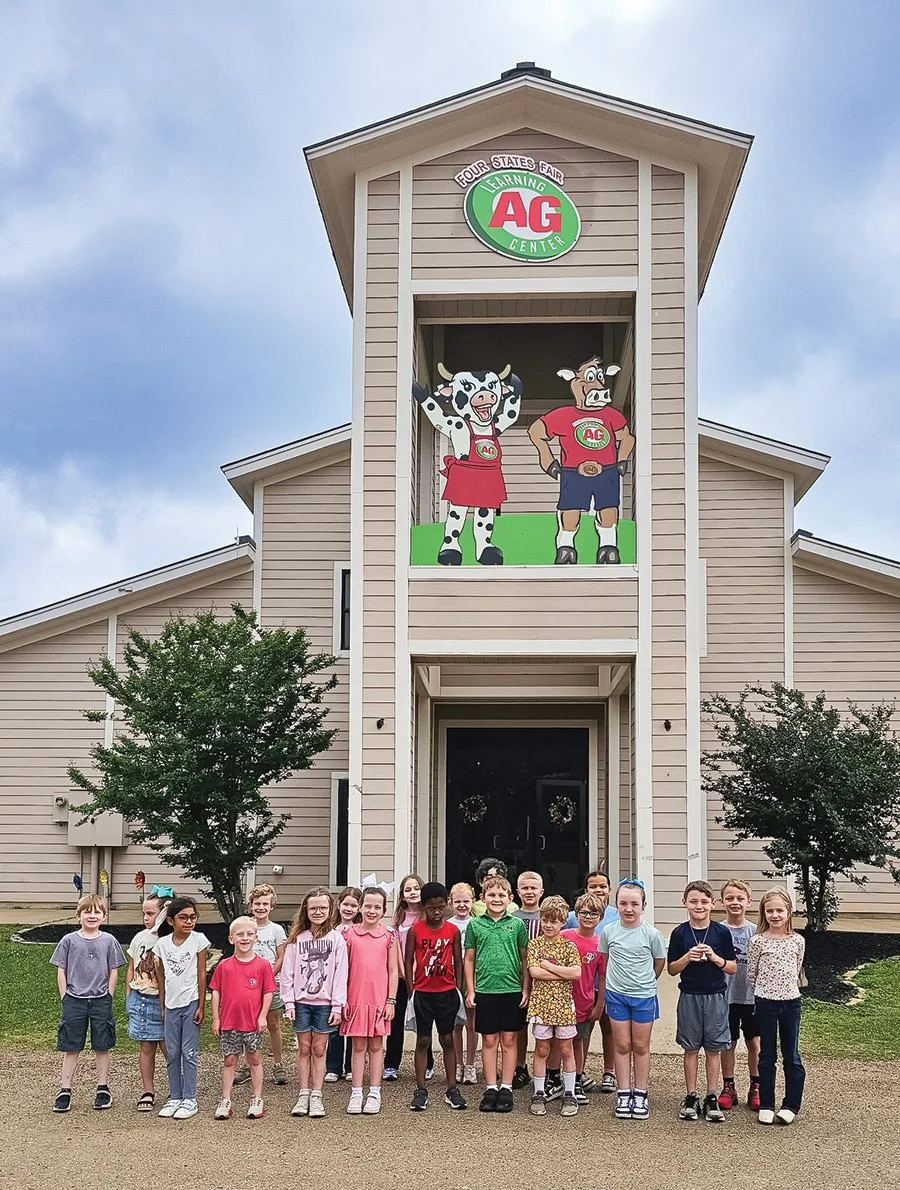
The Ag Learning Center offers year-round educational programming for children and families.
“The fair has always provided a place where our community can come together and experience agriculture,” Kristen said. “The Ag Learning Center allows us to carry that mission beyond fair week and make it a year-round experience.”
The fair’s buildings, exhibits, and entertainment have changed considerably since 1945, but the idea that agriculture is something worth seeing, understanding, and celebrating remains.
“We are connecting children to the agricultural heritage this organization was built around while also showing them what agriculture looks like today—and what it may look like in their future,” Kristen explained. “We are honoring where we came from while preparing children to understand where agriculture is going.”