
Healing Hands
/Equine therapist Maggie Tinajero performs massage and bodywork on competition horses
By Mary Lynn Patterson
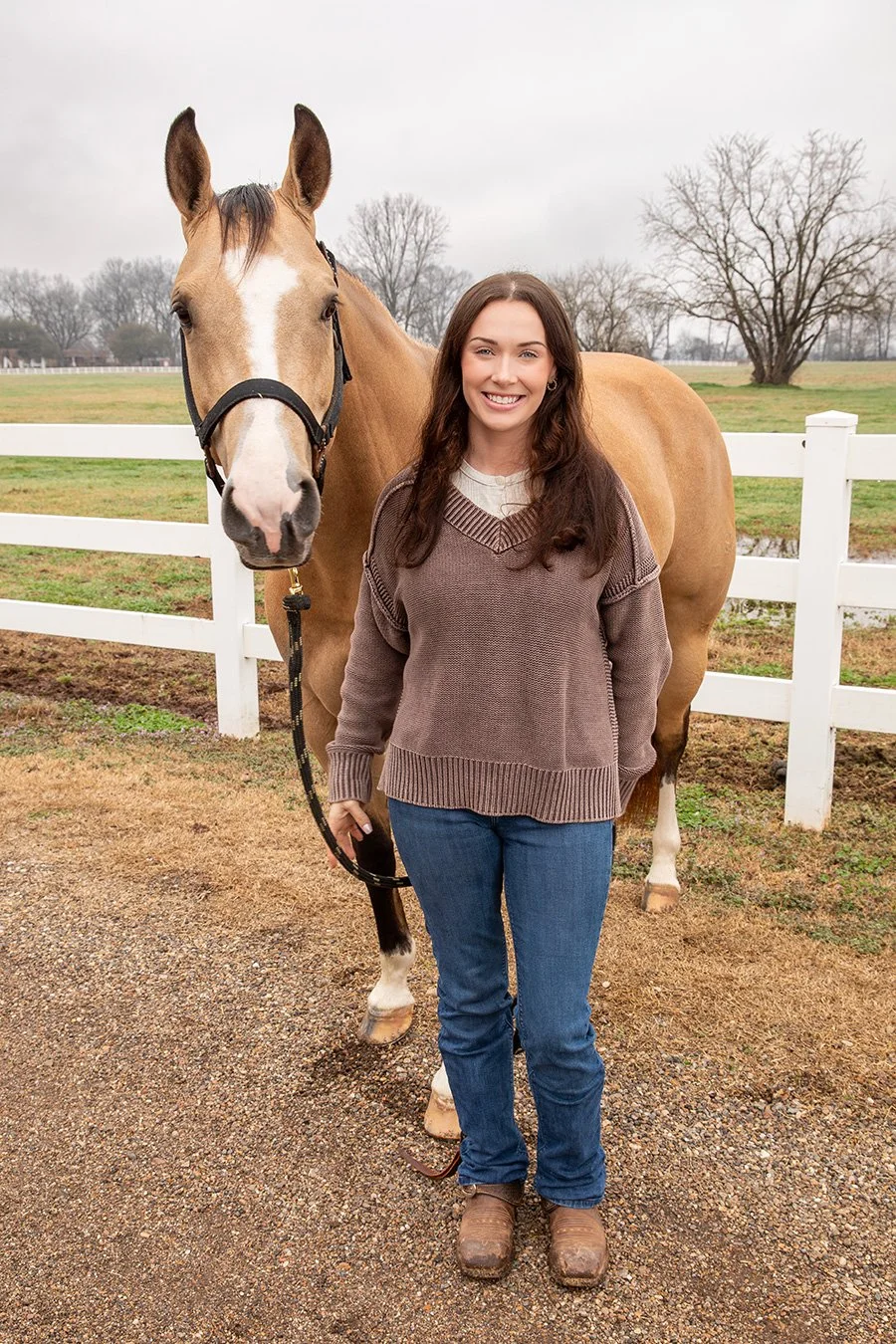
photo by shane darby
Maggie Tinajero’s love for horses developed the day her grandmother placed her, age 5, on a horse named Topper. “I remember [my grandmother’s] face as she begged us to slow down,” Maggie said. “My passion for horses never left.”
Maggie’s father grew up training and showing reining horses, and the sport runs deep in her blood. Reining is a sport in which horses are highly trained to execute precise, fast-paced patterns.
“My parents purchased my late great-uncle’s stallion, Simon, in 2019. They also bought me a mare named Hope,” Maggie said. “It wasn’t long after that our barn and pastures were full of reining bred quarter horses, and my dad, my husband Lucas, and I were all showing horses together.”
Maggie learned discipline and humility through showing horses. “In the show pen, you learn quickly that preparation matters,” she said. “Even when you do everything right, it doesn’t always go as planned. The times when everything goes right remind me it’s all worth it.”
Maggie also learned how intuitive horses are when it comes to human emotions. “Horses feel your energy and feed off of it,” she explained. “I am a very anxious person and learned quickly that I had to get that in-check in order to have a calm horse under me. Showing horses has taught me how to regulate my own nervous system.”
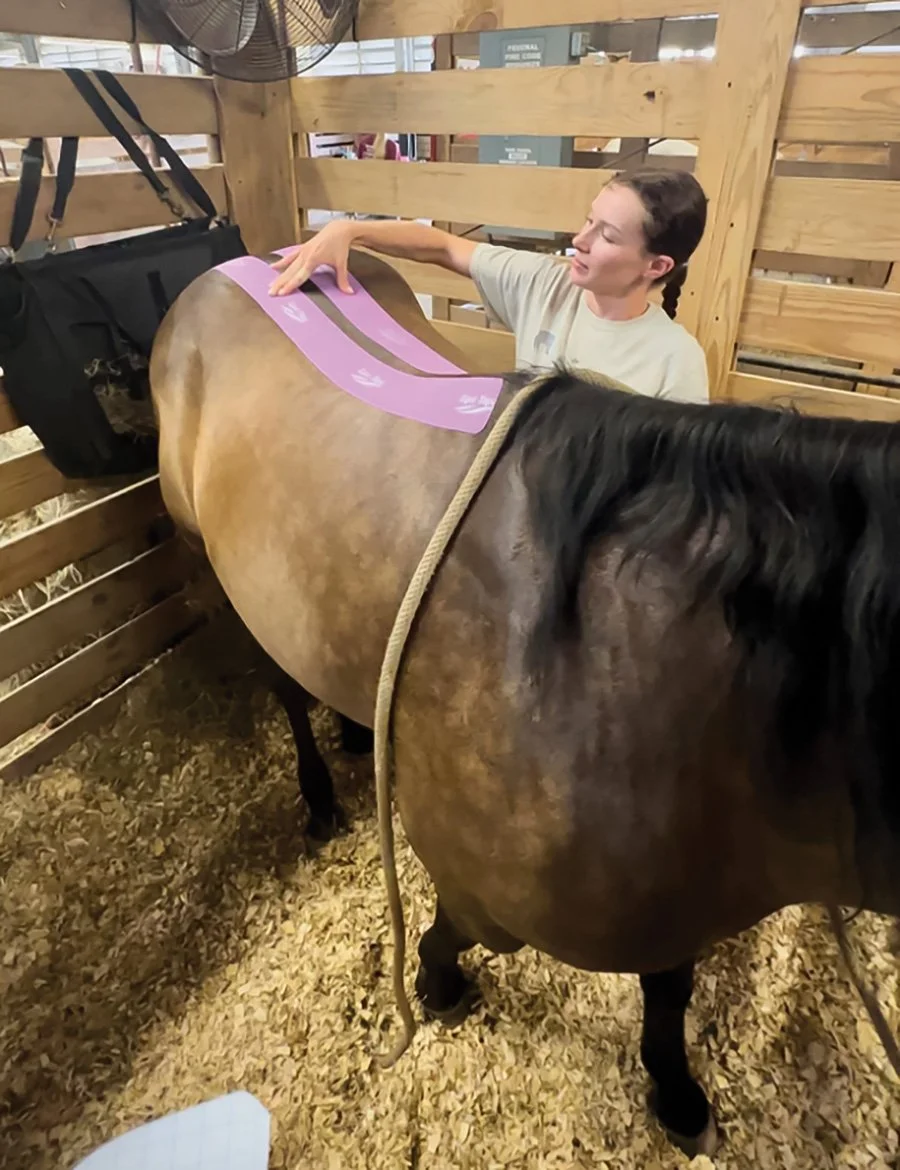
Maggie provided treatment for back soreness on this gelding named Diego at an Arkansas State Championship Horse Show. submitted photo
It was this emotional connection to horses that led Maggie to equine sports therapy in 2021. “I watched an equine therapist work on a mare who I knew to be quite spicy,” Maggie recalled. “I watched the mare’s demeanor do a complete 180 under the therapist’s touch and saw the relief in her eyes. I knew immediately I wanted to be an equine [sports] therapist and asked the therapist if I could work with her and learn her ways.”
Equine sports therapy—not to be confused with equine-assisted therapy—is massage and bodywork performed on competitive horses, or “equine athletes.”
Maggie shadowed the equine therapist for the next several years, eventually becoming certified in large animal massage in 2023. She also studied equine therapy in Vashon, Washington; Scottsdale, Arizona; and British Columbia, Canada. “Going from little quarter horses in Texas and Oklahoma to massive warmbloods on the West Coast was a huge shock,” she said. “Seeing the effects from different disciplines on body conformations was extremely enlightening. It also taught me to look at the horse as a whole.”
Her experience with showing horses gives Maggie a deeper understanding and appreciation for the animals as athletes. “Every subtle sign or change is the horse communicating,” Maggie explained. “I know what these horses are asked to do physically and mentally, so I’m able to take that into account in my work to help with recovery and to prevent injuries and strain on the body.”
Maggie explained that, “just like human athletes benefit from massage and physical therapy, equine athletes do too. Essentially, I help horses feel more comfortable within their bodies,” she said. “I address muscle and soft tissue tension and soreness to improve balance, increase circulation, boost recovery, and enhance overall performance.”
Also like humans, no two horses are alike, and Maggie honors that individuality in every therapy session. “Each horse truly is an individual, and no two sessions are ever the same,” she said. “The first thing I pay attention to is the demeanor of the horse. Are they bright and alert or standing in the back corner of their stall? Are they relaxed or nervous? I examine their posture. I will usually watch the horse move before starting. I’ll then introduce myself and ask their permission to touch. I believe horses can sense intention and energy, and I think this is why most horses I meet are very open to receiving bodywork.”
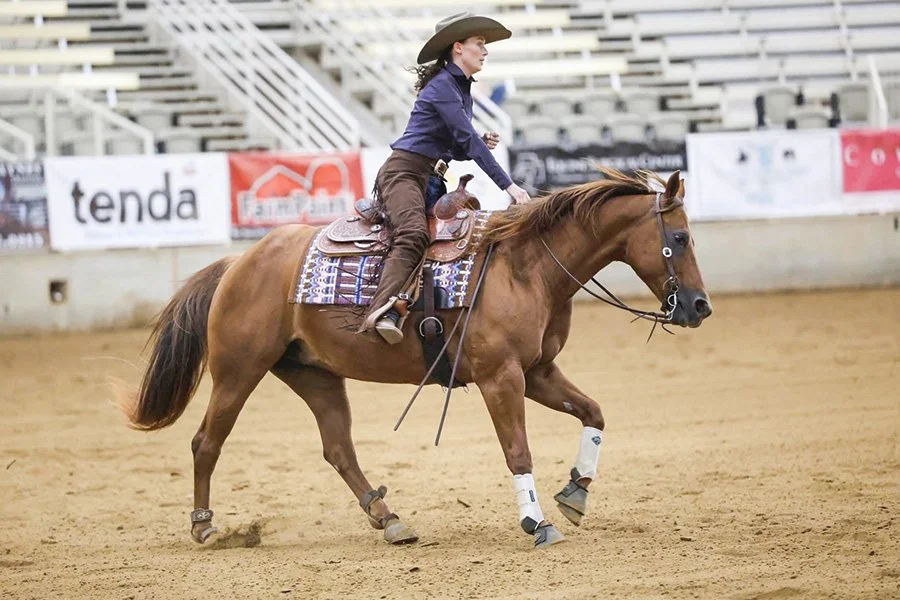
Maggie raced at a 2025 National Reining Horse Association show in Tennessee. submitted photo
Maggie plans to continue raising awareness of the benefits of equine therapy. “I have hopes of doing a few local demonstrations and pursuing partnerships with local veterinarians and trainers,” she said. “I desire to create a network where bodywork is a normal and valuable part of horse care.”
Maggie foresees a future where horse owners and trainers prioritize preventive care rather than waiting for problems or injuries to arise. “I hope that demand will increase as riders see the real benefits of massage and bodywork, and I will get to be a part of this mindset shift,” she said. “My dream is to one day own a therapeutic facility where horses can be treated daily for extended periods of time.”
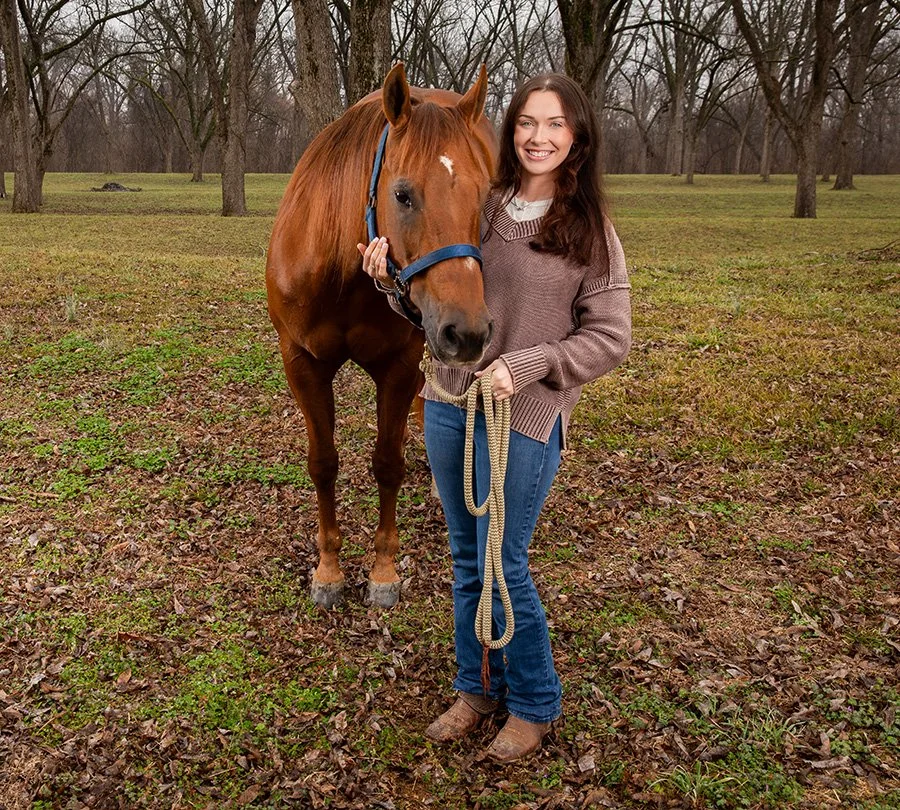
“I want to continue learning, improving, and putting my hands on horses in a way that makes a difference in how they feel and move.” - Maggie tinajero, photo by shane darby
Today, Maggie’s horse, Hope, is semi-retired and “spoiled rotten” after earning the title of National Reining Horse Association (NRHA) Rookie Pro World Champion in 2023. Maggie’s dad, Teddy, and her husband, Lucas, are both super involved in showing horses. Her son, Bellamy (5), is gaining interest in riding and showing. Maggie’s mom, Summer, loves to support them in all that they do. “I really value time with my family. I think they’re pretty proud of me and are happy I found something I enjoy so much,” Maggie said.
From riding Topper at full-speed to helping horses through equine therapy, Maggie envisions a life always surrounded by these majestic animals. “I hope horses and therapy continue to shape who I am,” she said. “I want to continue learning, improving, and putting my hands on horses in a way that makes a difference in how they feel and move. My goal is to look back and know I made their lives more comfortable. I’m certain horses and therapy will always be a part of my life.”