
From Three Graduates to 6,500 Tigers
/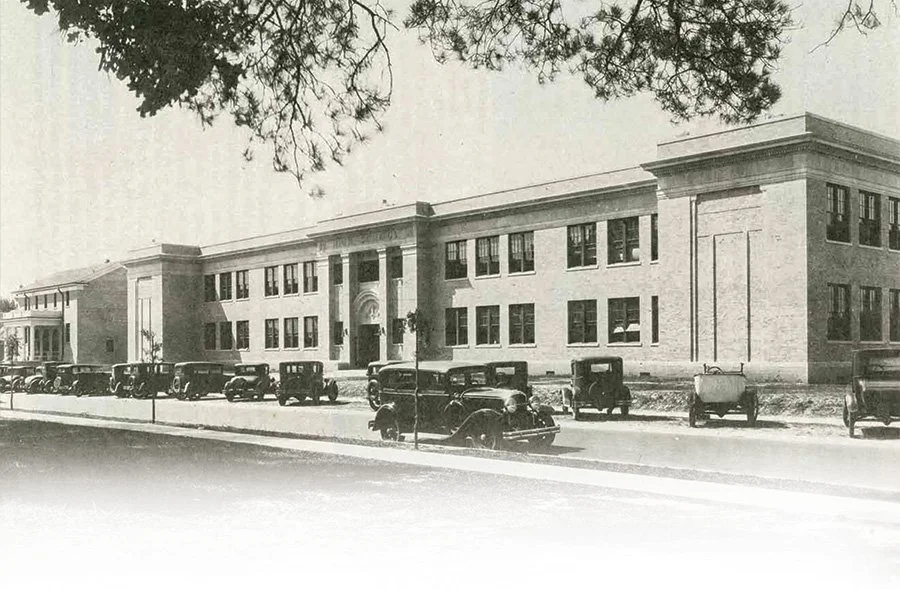
Texas Senior High School faced Pine Street in 1930.
More than 130 years of growth, change, and perseverance have transformed Texarkana Independent School District from a tiny school system into a thriving district
If the walls of Texarkana ISD could talk, they would have one heck of a story to tell. They could tell us about three teenagers who made up one of the district’s earliest graduating classes. They could tell us about boys who left high school to serve in World War I, World War II, and the Korean War, sometimes never returning to finish the diplomas they had started. They could tell us about football games that could turn an ordinary Friday night into a citywide event, and about a school system that spent decades wrestling with segregation before finally bringing Black and white students together.
And, if those walls were particularly nostalgic, they might tell us about a remarkable piece of ground on Pine Street that has been a high school, a junior college, and a junior high school, and is now a gleaming new elementary school.
That is the story of the Texarkana Independent School District.
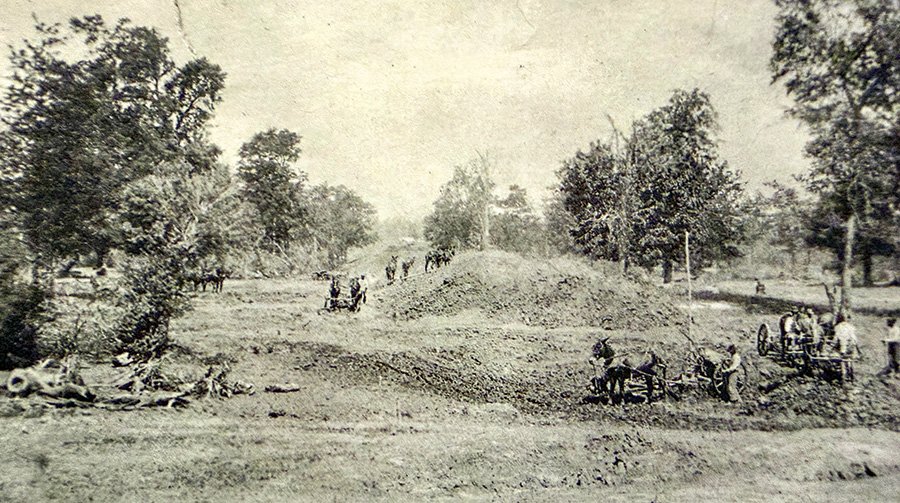
Clearing the land for the first Texas High School. This location is now Parks Elementary School.
TISD traces its history to 1889, when Texas High’s earliest graduating class was taking shape. Texarkana was still a young railroad town, and public education was growing right along with it. One of the earliest classes was so small that the names of its graduates are still known: Eugenie Reid, Nina Trigg, and Jack Trigg.
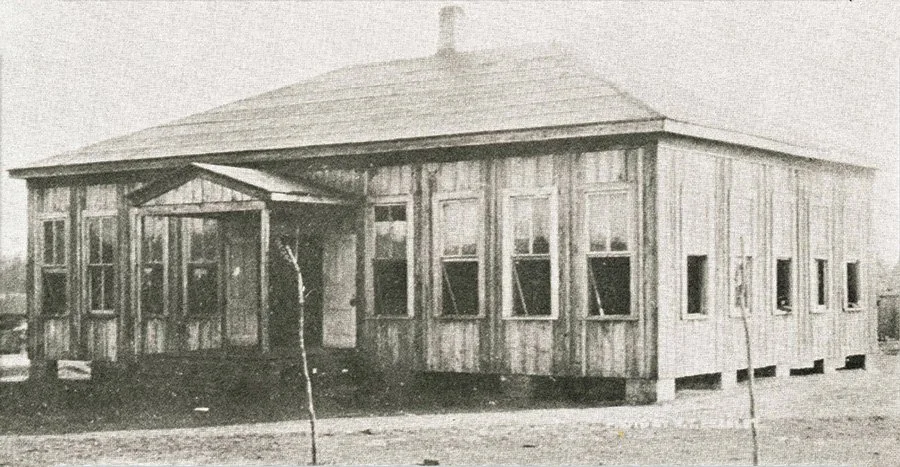
The first Texas High School photographed in 1889.
By the early 1900s, Texarkana was growing too large for the little school buildings of the previous century. In 1909, the school board purchased four acres from Mr. and Mrs. John S. Casey on Texas Boulevard (then Maple Avenue at West 16th Street). That property became the educational heart of Texarkana for generations. Texas High moved there, and the campus continued to evolve.
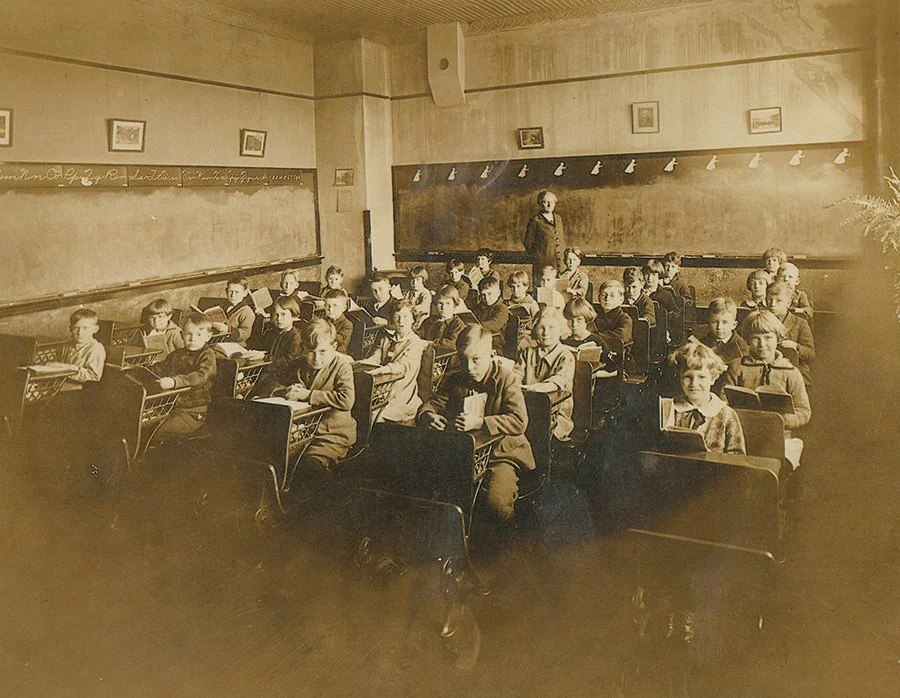
A class at Highland Park Elementary in 1925.
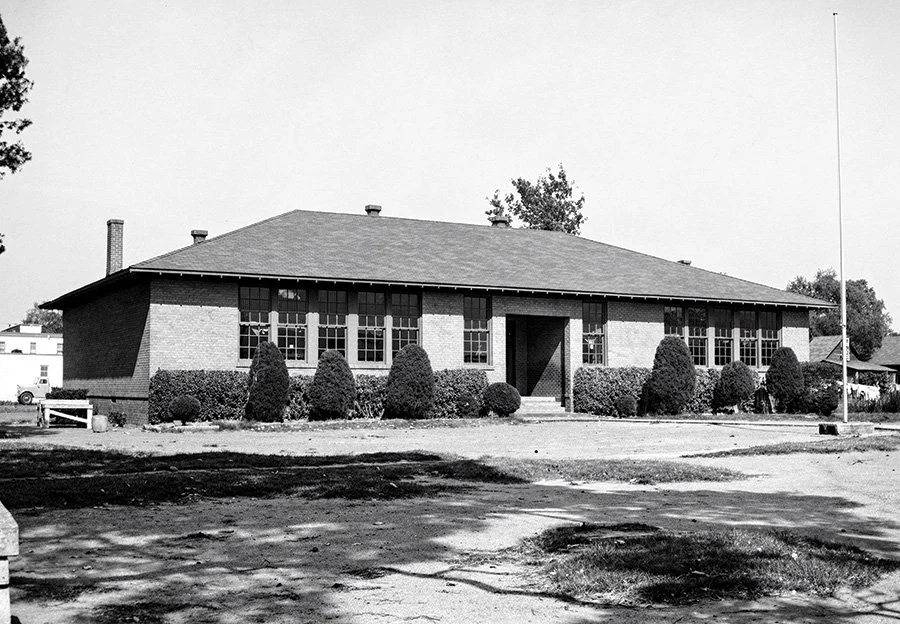
Dunbar School East was one of the earliest Black schools in the area for African Americans.
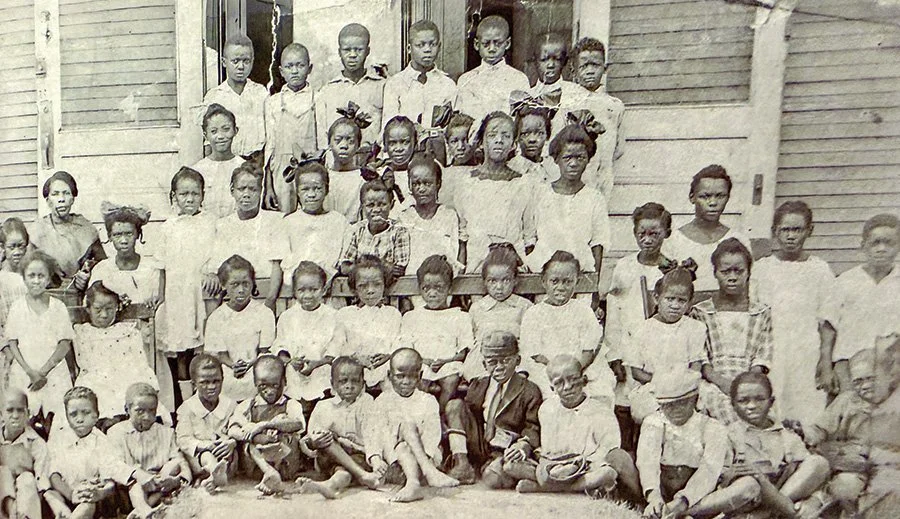
Mrs. Plant’s class at Dunbar School in 1900.
In 1927, Texarkana decided it needed something more than a high school. It needed a college. Enter Dr. Henry W. Stilwell. Stilwell was superintendent of TISD at the time and became the first president of Texarkana Junior College, (serving in both roles simultaneously). The new junior college was established on the Pine Street property right next to Texas High, and the two institutions shared facilities, including laboratories and a gymnasium. For a time, a Texarkana teenager could walk from high school to college without leaving campus.
Texarkana College moved to its Robison Road location in 1953 and formally separated from TISD in 1957.
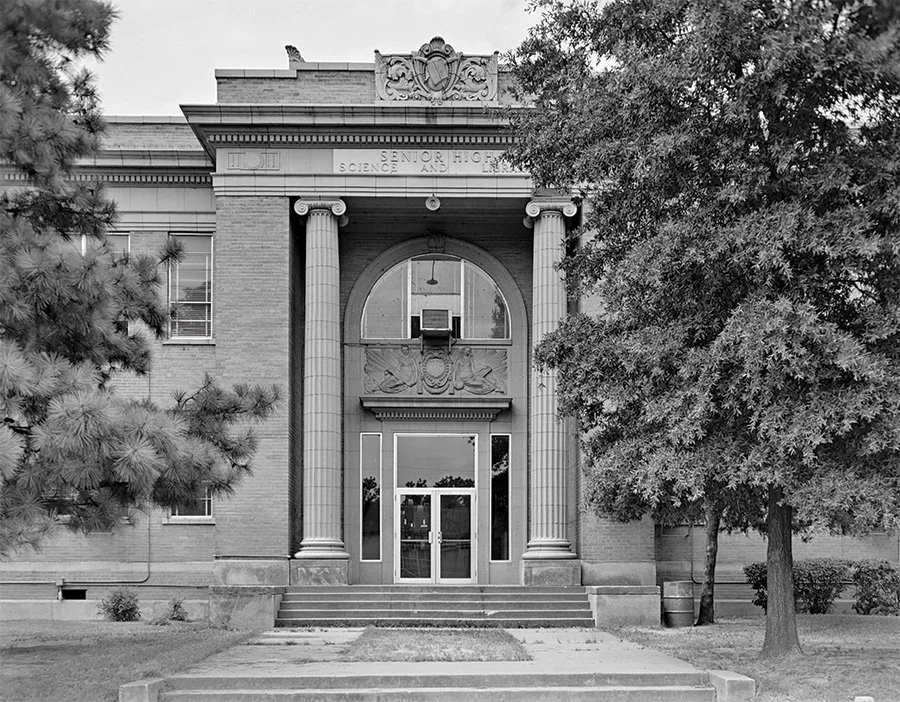
Texarkana Junior College’s first building was on the same campus with TISD (at the Pine Street location). This building faced W. 16th Street.
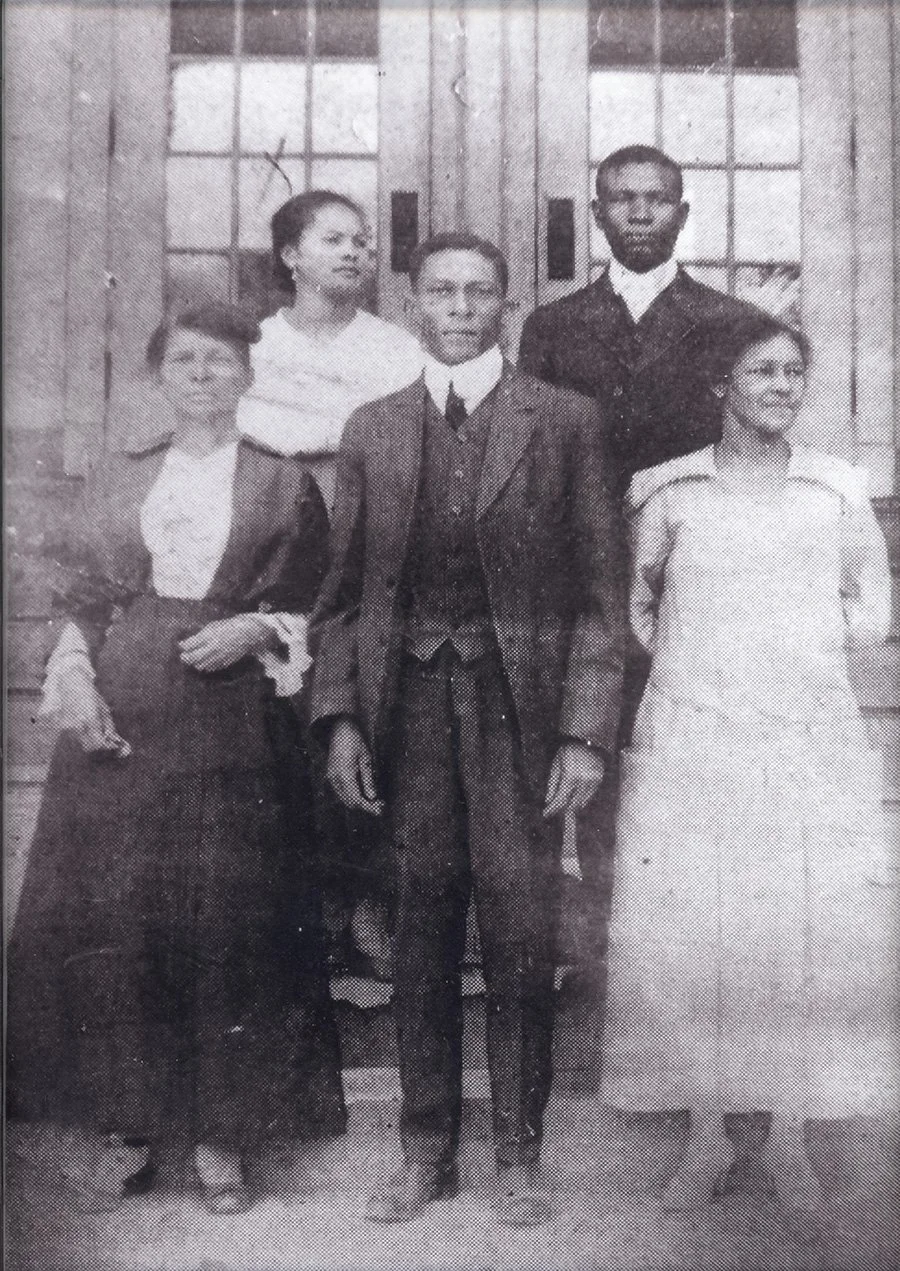
Educational giant Professor Beecher A. Jackson, a graduate of Fisk University and Harvard University Law School, accepted the principalship of Dunbar in 1916. He proposed changing the school’s name from Central, which was in conflict with the white school of this vicinity, to Dunbar.
In 1955, 92 Black parents and students petitioned TISD to integrate. The school board acknowledged the petition but made no moves to end segregation throughout the district. At the time, Dunbar High School was the center of Black education in Texarkana. The school produced generations of accomplished community leaders, including George Moore, Dr. Joyce Armstrong, and Melvin Bradley.
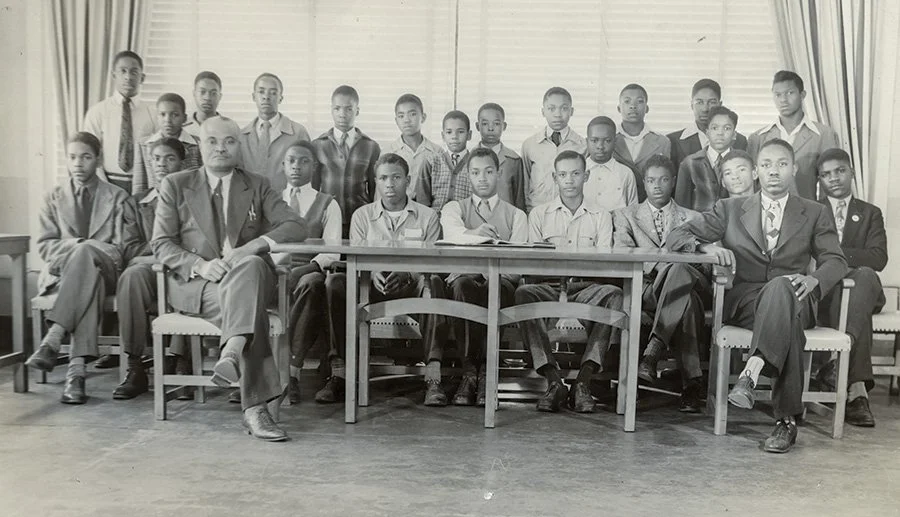
Dunbar High School operated for over 100 years. Principal A.E. Alton led the school for 36 years. Alton served Dunbar through the years of segregation; today, streets near the school are named for him.
A full decade after Brown v. Board of Education, the district adopted a “freedom of choice” plan—what some saw as a step toward integration—but the district remained practically segregated. The truly consequential change came in 1968, when TISD submitted a plan to the federal government that would close Dunbar as a senior high school and send students of all races to the new Texas Senior High campus on Kennedy Lane, which had opened the year prior. The district’s own records show just how separate the schools had been at that time: Texas High had 1,127 white students and 71 Black students, while Dunbar had 744 Black students and no white students.
By 1969, TISD was moving toward a fully integrated system, but integration was more challenging than the school board changing attendance zones.
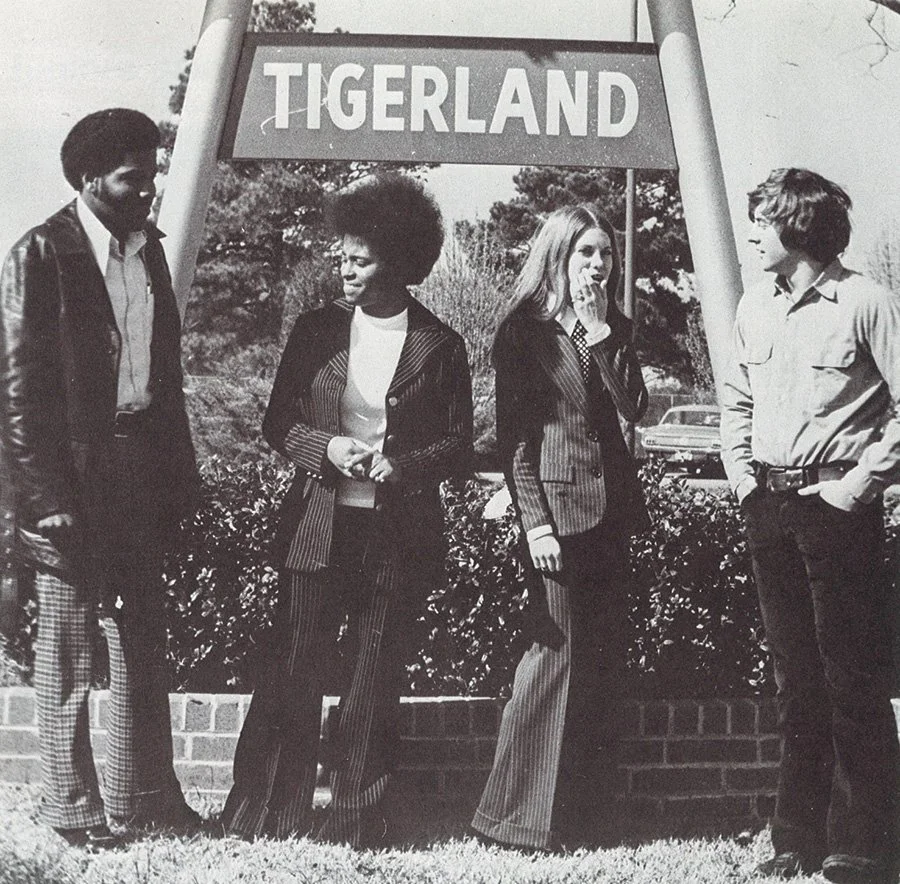
Two couples from the Texas High Class of 1973 visit in front of the Kennedy Lane marquee.
In February 1971, Bob Ingram, the Texas High band director, announced that he was opening up two majorette spots for Black girls. This led to large-scale protests on campus in which hundreds of students were caught up in racial tension, suspensions, and disciplinary hearings. More than 200 students were initially suspended, and parents sued the district.
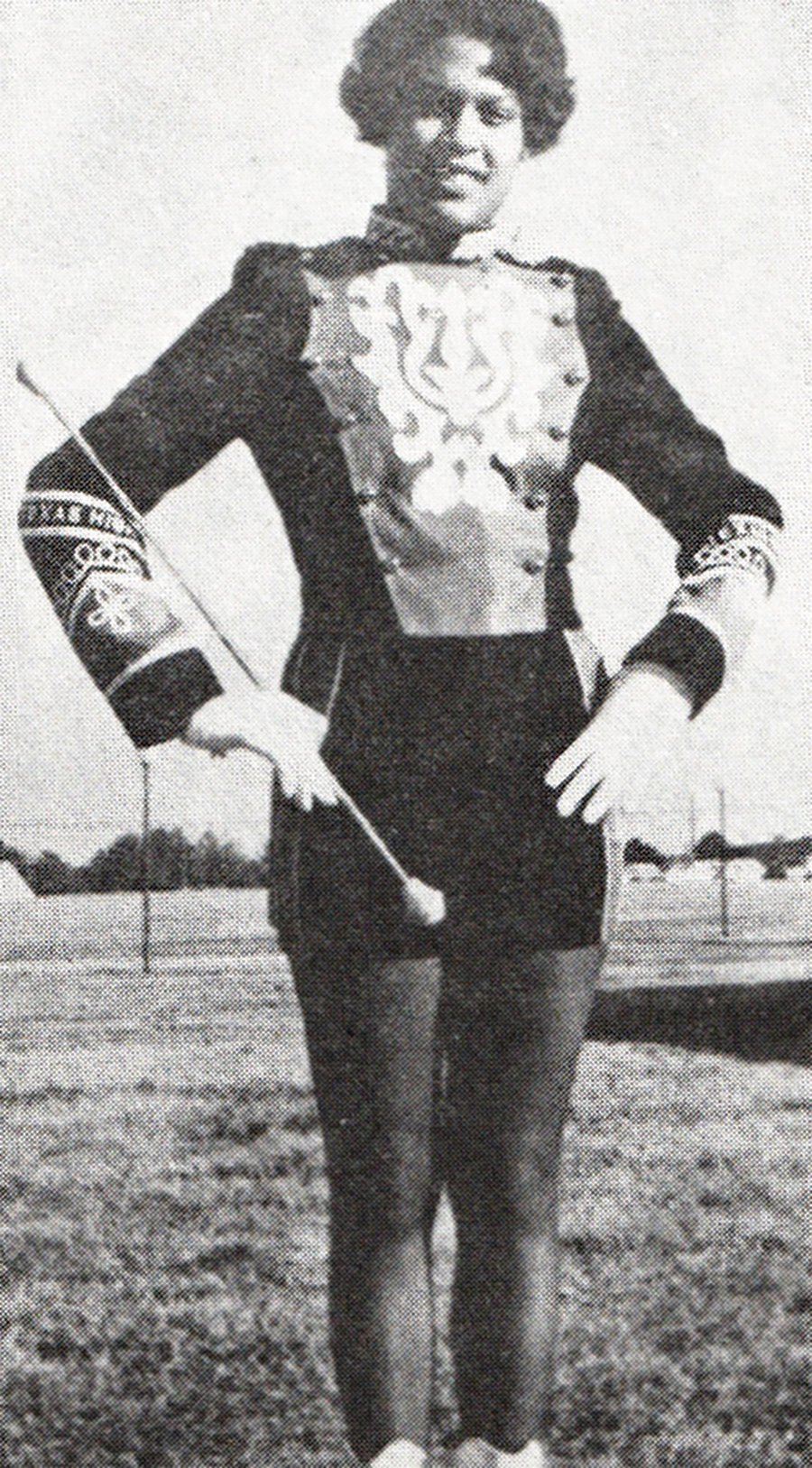
Andrea Hopwood was a majorette in the 1971–72 school year.
Despite these growing pains, the district persisted; also in 1971, biology teacher George Moore entered Texas High School in its new prized location on Kennedy Lane at Summerhill. Moore had experienced segregation as a Black student, so coming to work in a recently integrated high school was a bridge between two eras of the district’s history. As a Black educator, Moore understood the significance of students seeing someone who looked like them at the front of the classroom. Over 48 years with TISD, Mr. Moore’s influence continued into administration as a principal and assistant superintendent who shaped the lives of students and community members. Today, TISD proudly serves a diverse student body, providing a first-rate education to students from all backgrounds.

Over the years, Mr. George Moore served TISD as a biology teacher, assistant principal at Westlawn Elementary, and principal at 15th Street Elementary, Pine Street Middle School, and Texas Middle School. His leadership later extended to the district level as assistant superintendent for campus operations and assistant superintendent for alternative education.
While Texas High School grew at its new location, the original Pine Street campus was left with a gymnasium, a library, and original facilities from the early 1900s. Pine Street Junior High School, later called Pine Street Middle School, served students in that location until the district opened Texas Middle School on College Drive and the original campus was finally shut down in 2002.
Today, that original school property on Pine has come full circle. Thanks to many citizens who toured all of the district facilities and helped pass a $189 million bond in 2022, 1915 Pine Street is now home to Parks Elementary School, a state-of-the-art elementary campus designed around leadership and college/career preparation. The property that once educated teenagers and college students is now home to kindergarten and elementary classrooms.
Also thanks to that historic bond (voted for by the taxpayers) the historic Dunbar School has a new life, too. The Paul Laurence Dunbar Early Education Center, opened in 2025, is a modern early-childhood facility designed especially for the hundreds of 3- and 4-year-old students it serves.

TISD students across 12 campuses are thriving and learning the skills and arts that will take them far into the future.
Further, bond dollars have transformed facilities across the system. Nash Elementary has received incredible renovations. At Texas High, the bond is funding major career and technical education renovations and new state-of-the-art learning environments designed for workforce training and dual-credit opportunities.
Today, TISD serves more than 6,500 students across its 12 campuses. Interim Superintendent Sherri Penix, a longtime TISD leader, is guiding the district during its search for a permanent superintendent.
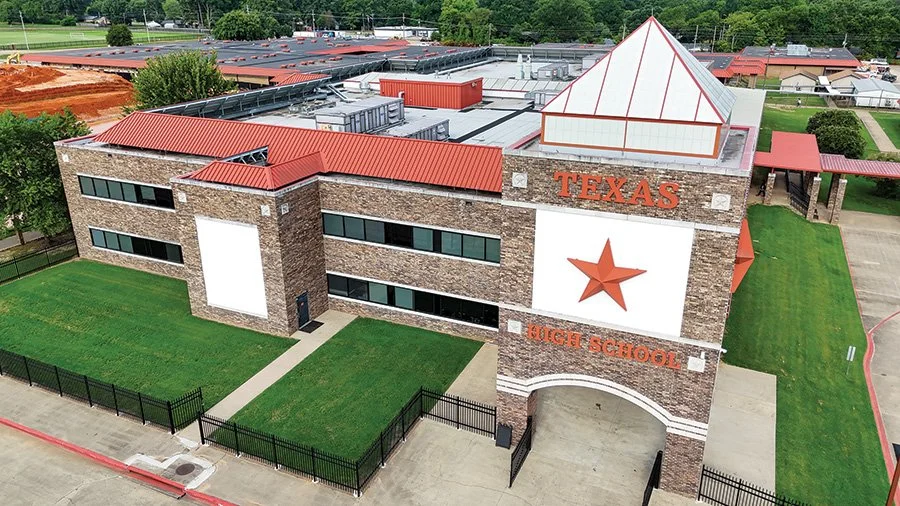
Texas High School at Kennedy Lane and Summerhill Road has grown into a sprawling campus where academics, athletics, fine arts, and student activities come together under one roof—and where generations of Texarkana students have made memories along the way.
It is a long way from three graduates.
The buildings have changed. The neighborhoods have changed. The curriculum has changed. Texarkana itself has changed. But one thing hasn’t: for more than 130 years, the people of Texarkana have continued to believe that the next generation is worth investing in.
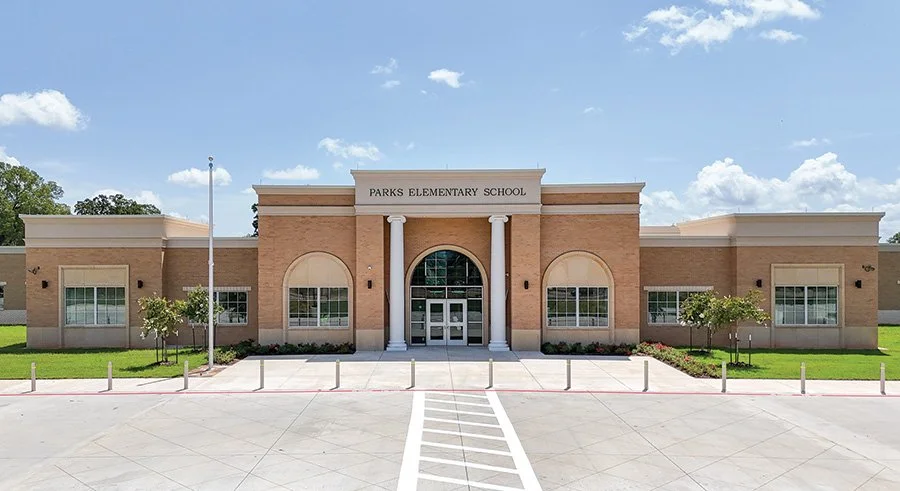
Parks Elementary brings a new generation of learning to a site with more than a century of educational history. The modern campus features flexible learning spaces, a library designed for literacy and creativity, a bright cafeteria, a central courtyard, and technology-rich classrooms—all while incorporating architectural details and artifacts that honor the schools and students that came before. The site of Parks Elementary previously housed Pine Street Middle School, Texas High School, and Texarkana College.

Sherri Penix returned from retirement in 2026 to lead Texarkana Independent School District as interim superintendent, bringing more than four decades of experience in education and a deep familiarity with TISD. After serving as the district’s deputy superintendent, Penix stepped into the top leadership role during a year of transition, guiding TISD into the 2026–27 school year.
Thankfully, that is the true story of TISD. That original Pine Street campus taught high school students, college students, and junior-high students. In 2026, it is teaching little Tigers. Parks Elementary now sits at 1915 Pine. The new campus opened its doors in 2025, bringing little Tigers back to the same ground where generations of older Tigers once went to school. The building intentionally incorporates reminders of the past while providing a thoroughly modern learning environment. Same ground, new generation. And, if history is any indication, another chapter is already being written.